Author name: Nibha

Gruha Jyothi Scheme Telangana
State Schemes

Gruha Jyothi Scheme Telangana: Eligibility, Application Process, Benefits & Required Documents

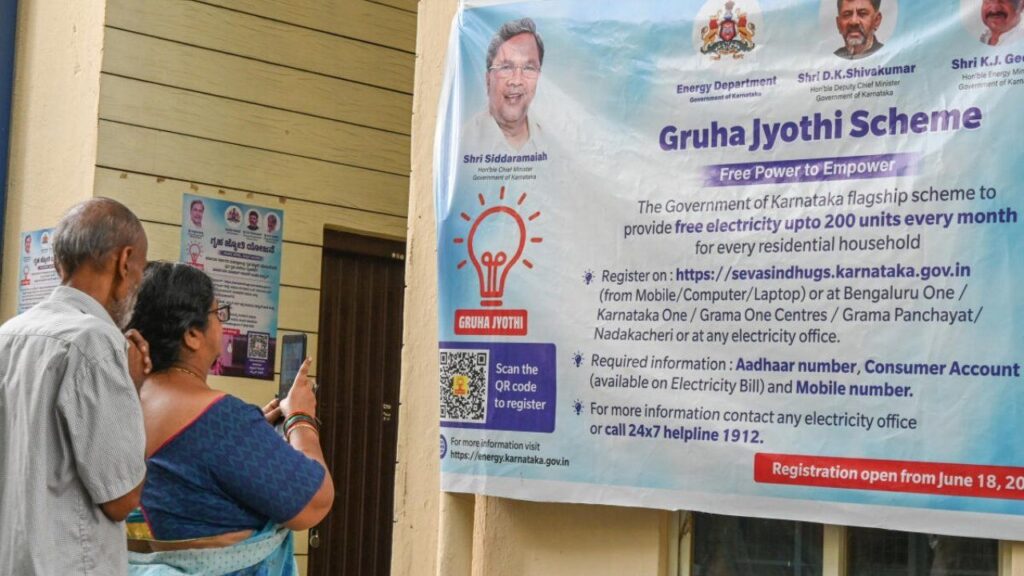
Rising electricity costs often put pressure on household budgets, especially for low-income families. To ease this burden, the Telangana government introduced a welfare initiative that ensures basic electricity needs are met without financial stress. Under this scheme, eligible households can receive free power for limited monthly usage, helping them manage expenses better. ⭐ What is the Gruha Jyothi Scheme in Telangana? The Gruha Jyothi Scheme is a free electricity programme launched by the Telangana Government for domestic consumers. Under this scheme, qualifying families are provided electricity at zero cost for consumption of up to 200 units per month. If a household’s usage stays within this limit, no electricity bill is charged. However, if consumption crosses 200 units, the extra units are billed as per regular rates. ⭐ Gruha Jyothi Scheme: Key Details at a Glance Particulars Information Scheme Name Telangana Gruha Jyothi Scheme Implemented By Government of Telangana State Telangana Purpose Free electricity up to 200 units Beneficiaries Domestic electricity consumers Application Mode Offline Benefit Zero bill up to 200 units Start Date 01 March 2024 ⭐ Main Benefits of Gruha Jyothi Scheme ⭐ Who Can Apply? (Eligibility Conditions) To get benefits under this scheme, applicants must meet the following requirements: ⚠️ Commercial electricity connections are not eligible under this programme. ⭐ How to Apply for Gruha Jyothi Scheme Telangana The application process is simple and completely offline. Step-by-Step Application Process After verification, eligible households start receiving the benefits automatically. ⭐ Details to Fill in the Application Form While filling the form, applicants need to provide: Once completed, the form along with documents must be submitted to the municipal office. ⭐ Documents Required for Gruha Jyothi Scheme Applicants must submit photocopies of the following documents: ⭐ Important Points to Know Conclusion The Gruha Jyothi Scheme has become a major support system for households in Telangana by ensuring access to essential electricity without financial strain. With simple eligibility rules and an offline application process, the scheme continues to help families reduce monthly expenses. For more easy-to-understand guides on government schemes and applications, visit Sarkari Bakery.

PM Internship Scheme 2025
PM Scheme

PM Internship Scheme 2025: Eligibility, Age Limit, Last Date, Stipend & Status Tracking

The PM Internship Scheme 2025 is a major initiative aimed at helping young Indians gain real workplace experience with reputed companies. Instead of only theoretical learning, this scheme focuses on practical exposure, skill development, and financial support, making youth more job-ready for the future. With paid internships, insurance cover, and opportunities across hundreds of districts, the scheme plays an important role in improving employability among students and unemployed youth. ⭐ Overview of PM Internship Scheme 2025 Details Information Scheme Name PM Internship Scheme (PMIS) Implementing Ministry Ministry of Corporate Affairs Age Limit 21 to 24 years Internship Duration 12 months Monthly Stipend ₹5,000 One-time Grant ₹6,000 Total Vacancies 1,25,000 Participating Companies Top 500 companies Mode of Application Online Last Date to Apply 22 April 2025 Helpline 1800116090 ⭐ What is the PM Internship Scheme? The PM Internship Scheme was announced during the Union Budget 2024–25 and officially launched in October 2024. The goal is to offer one crore paid internship opportunities over five years to Indian youth. Interns get hands-on experience in real business environments across sectors such as banking, finance, oil and gas, hospitality, energy, automation, and travel. This exposure helps bridge the gap between classroom education and industry requirements. The scheme also helps participants build professional networks, understand workplace culture, and improve their chances of securing long-term employment. ⭐ Important Dates for PM Internship Scheme 2025 ⭐ Eligibility Criteria Explained Candidates must meet all the following conditions: ❌ Who Cannot Apply? ⭐ Benefits of the PM Internship Scheme Interns are covered under Pradhan Mantri Jeevan Jyoti Bima Yojana and Pradhan Mantri Suraksha Bima Yojana, with premiums paid by the Government of India. ⭐ How to Apply Online for PM Internship Scheme 🔹 Registration Steps 🔹 Applying for Internship Opportunities Applications are reviewed by companies, and shortlisted candidates may be called for online interviews or assessments. ⭐ How to Check PM Internship Scheme Status Checking the dashboard regularly helps avoid missing important updates. ⭐ Documents Required ⭐ PM Internship Scheme Mobile App The PMIS mobile app allows easy access to registration, internship applications, Aadhaar-based verification, real-time alerts, and a personalised dashboard to track progress. ⭐ PM Internship Scheme Stipend Details ⭐ Helpline and Contact Details Conclusion The PM Internship Scheme 2025 creates a strong foundation for youth by combining income support, skill development, and real industry exposure. It opens doors to top companies while helping young individuals gain confidence and practical experience needed for long-term career growth. For more simplified guides on government schemes and applications, visit Sarkari Bakery.

Senior Citizen Savings Scheme
Savings

Senior Citizen Savings Scheme (SCSS) 2025: Interest Rate, Eligibility, Tax Benefits & Rules

Planning a secure and regular income after retirement is a top priority for most senior citizens in India. To support this need, the Government of India offers the Senior Citizen Savings Scheme (SCSS), a trusted option under post office and bank savings schemes. It is designed to provide safety, predictable returns, and quarterly income to elderly citizens. Below is a complete and easy-to-understand guide covering interest rates, eligibility, tax benefits, limits, and important rules of SCSS for 2025. ⭐ What Is Senior Citizen Savings Scheme (SCSS)? SCSS is a government-backed savings scheme meant exclusively for senior citizens. It helps retirees earn steady interest income while keeping their capital safe. Accounts can be opened individually or jointly with a spouse at authorised banks or post offices. ⭐ Key Highlights of SCSS 2025 ⭐ Eligibility Criteria for SCSS The following individuals can open an SCSS account: ⭐ Main Features of SCSS ✔ Safe and Reliable Investment Since SCSS is supported by the Government of India, capital protection and assured returns are its strongest advantages. ✔ Multiple Accounts Allowed A senior citizen can open more than one SCSS account, provided the total investment does not exceed ₹30 lakh. ✔ Joint Account Facility Joint accounts are allowed only with spouse, but the entire deposit is considered under the first holder. ✔ Nomination Facility Nominee details can be added at the time of opening or updated later. ⭐ Deposit Rules Under SCSS Retirement benefits include: Excess deposit amount, if any, is refunded immediately. ⭐ Transfer of SCSS Account ⭐ Tax Benefits Under SCSS ⭐ Premature Withdrawal & Penalty Rules SCSS allows early closure, but penalties apply: Closure Time Penalty Before 1 year Entire interest recovered 1–2 years 1.5% of principal After 2 years 1% of principal ⭐ Maturity & Extension ⭐ SCSS Interest Rate Details Particulars Information Interest rate 8.2% per annum Revision Quarterly Interest payment Quarterly Payment months April, July, October, January ⭐ Banks Offering SCSS SCSS accounts can be opened at: Examples include SBI, PNB, Canara Bank, Bank of Baroda, Union Bank, ICICI Bank, and others. ⭐ Documents Required to Open SCSS Account All documents must be self-attested. Conclusion The Senior Citizen Savings Scheme remains one of the most dependable retirement income options in India. With government backing, quarterly income, and tax-saving benefits, it suits risk-averse retirees seeking stability. However, understanding limits, taxation, and withdrawal rules is essential before investing. A well-informed approach helps ensure financial comfort during retirement years. For more simple and reliable guidance on government schemes, savings plans, and documentation, visit Sarkari Bakery. FAQs

Disadvantages of Senior Citizen Savings Scheme
Savings

Disadvantages of Senior Citizen Savings Scheme (SCSS) You Should Know

India’s senior citizens often look for investment options that are safe, stable, and capable of providing regular income after retirement. One such popular option is the Senior Citizen Savings Scheme (SCSS), backed by the Government of India. While it is known for security and decent interest rates, it is not free from limitations. Understanding the drawbacks is equally important before committing your retirement funds. Below is a clear and practical explanation of the key disadvantages of the Senior Citizen Savings Scheme, explained in simple terms for easy decision-making. ⭐ Limited Age Eligibility The SCSS is strictly meant for people aged 60 years or above. Those who retire early or plan their retirement before this age cannot invest under this scheme. ⭐ Low Liquidity and Lock-in Period One major concern with SCSS is restricted access to funds. The scheme comes with a five-year lock-in period. This lack of liquidity can become stressful if funds are urgently required. ⭐ Maximum Investment Limit Restriction SCSS allows a maximum investment of ₹30 lakh per individual. While this may be sufficient for some, it can be limiting for retirees with larger savings. Aspect Impact Investment cap ₹30 lakh only Larger savings Must be split across multiple schemes Portfolio management Becomes complex Managing multiple investments can lead to confusion and missed opportunities. ⭐ Interest Income Is Fully Taxable The interest earned from SCSS is taxable as per the individual’s income tax slab. This reduces the actual returns received in hand. ⭐ TDS Deduction on Interest If the yearly interest earned crosses ₹50,000, 10% TDS is deducted. This can affect regular cash flow if not planned properly. ⭐ No Benefit of Compounding SCSS follows a simple interest structure, not compound interest. For investors focused on long-term growth, this is a major drawback. ⭐ Limited Availability and Access The scheme is available only through post offices and selected banks. Many retirees prefer a single platform to manage all investments, which SCSS does not offer. ⭐ No Transfer to Another Person SCSS accounts cannot be transferred to another individual. This restriction can be inconvenient in changing life situations. ⭐ Joint Account Limitations Although joint accounts are allowed, there are restrictions: Conclusion The Senior Citizen Savings Scheme offers safety and predictable income, but it is not a one-size-fits-all solution. Factors like limited liquidity, taxable interest, lack of compounding, and investment caps make it less flexible for many retirees. Before investing, it is wise to evaluate your income needs, tax position, emergency requirements, and long-term goals carefully. Balanced planning helps ensure financial comfort during retirement. For more simple and reliable guidance on government schemes and financial topics, visit Sarkari Bakery. FAQs

Post Office Monthly Income Scheme
Savings

Post Office Monthly Income Scheme (POMIS) – Interest Rate 2025–26, Benefits, Eligibility & Complete Guide

The Post Office Monthly Income Scheme (POMIS) is one of India’s most trusted savings schemes for people who want a safe investment with regular monthly income. Backed by the Government of India, this scheme allows investors to deposit a lump sum amount and earn fixed monthly interest for a period of five years. With an interest rate of 7.40% per annum for FY 2025–26, POMIS is especially popular among retirees, senior citizens, and conservative investors who prefer stability over market-linked returns. Latest POMIS Interest Rate (2025–26) For the current financial year, the government has kept the POMIS interest rate unchanged. The interest amount is paid every month and can be credited directly to your Post Office Savings Account or transferred to your bank account through ECS. What Is the Post Office Monthly Income Scheme? POMIS is a fixed-income savings scheme offered by India Post. It is designed for individuals who want: Unlike equity or mutual funds, returns under POMIS do not depend on market performance. Once you invest, the interest rate remains fixed for the entire tenure. At maturity, the original invested amount is returned, and investors can either withdraw or reinvest it. How Does POMIS Work? (Example Explained) Let’s understand this with a simple example: This ₹5,550 is paid every month for five years. The investor continues to receive this income without touching the principal, which is returned at maturity. Key Features of the Post Office Monthly Income Scheme Government-Backed Safety POMIS is supported by the Government of India, ensuring complete protection of your invested capital. Regular Monthly Income Interest is paid every month, making it suitable for meeting household expenses or retirement needs. Fixed Tenure The scheme has a fixed lock-in period of 5 years, providing financial discipline. Low Entry Requirement Accounts can be opened with as little as ₹1,000, and further deposits can be made in multiples. Multiple Account Options You can open: Nomination Facility Nominees can easily claim the deposit and interest in case of the account holder’s death. Reinvestment Option After maturity, the amount can be reinvested for another five years. POMIS Investment Limits Account Type Maximum Investment Single Account ₹9 lakh Joint Account ₹15 lakh In joint accounts, all account holders have equal ownership. An individual cannot exceed ₹9 lakh across all POMIS accounts combined. Eligibility Criteria for POMIS To open a POMIS account: Interest Payment Rules Taxation of POMIS Because of this, POMIS is better suited for investors prioritizing income stability rather than tax savings. Who Should Invest in POMIS? POMIS is suitable for: How to Open a POMIS Account The process is simple and offline: Premature Withdrawal Rules Withdrawal Time Penalty Before 1 year No interest paid 1–3 years 2% deduction 3–5 years 1% deduction Premature closure requires submitting a written request along with the passbook. POMIS Compared With Other Monthly Income Options POMIS offers stable and predictable returns, unlike mutual funds which are market-linked or insurance plans that come with long lock-in periods and surrender charges. Historical POMIS Interest Rates The interest rate has remained stable over the years, reflecting reliability: Final Overview The Post Office Monthly Income Scheme (POMIS) is a dependable savings option for individuals who want regular income with minimal risk. While it does not offer tax deductions, its safety, fixed returns, and government backing make it an excellent choice for conservative investors. Frequently Asked Questions (FAQs)

Atal Canteen
State Schemes

Atal Canteen in Delhi: ₹5 Meal Scheme, Timings & Complete Location List

The Atal Canteen Scheme in Delhi is a major welfare initiative aimed at providing nutritious and affordable meals for just ₹5 to the urban poor, daily wage workers, migrant labourers, and economically weaker sections. Launched in memory of former Prime Minister Atal Bihari Vajpayee, the scheme focuses on food security, dignity, and inclusive development. With dozens of canteens already operational across the capital, Atal Canteen has become a lifeline for thousands of people who struggle to afford regular meals. What Is Atal Canteen? An Atal Canteen is a government-supported community kitchen where a full, balanced meal is served at a highly subsidised price. These canteens are set up in labour-dense areas, JJ clusters, industrial zones, and low-income residential localities to ensure maximum reach. Objective of the Atal Canteen Scheme The main goals of the scheme are: What Food Is Served at Atal Canteen? Each Atal Canteen serves a 600-gram nutritious thali consisting of: The food is freshly prepared and served under monitored hygiene standards. Cost of Food The actual cost is much higher, but the government covers the remaining amount through subsidies. Meal Timings Atal Canteens operate twice daily: (Some locations may operate with slightly extended timings.) Token System To ensure fair access and prevent misuse: Capacity 📍 Complete List of Operational Atal Canteens in Delhi (45 Locations) Below is the official list of all currently operational Atal Canteens in Delhi, helping people easily locate the nearest canteen: 🟢 North & North-West Delhi 🟢 West Delhi11. Shaheed Bhagat Singh Camp, Paschim Puri12. N-Block, Mangolpuri13. Land near BVK, G-Block, Mangolpuri14. Vacant land between JJ Cluster, Shyam Nagar and Shikhri Bhatta15. R Block JJC, Raghubir Nagar16. Near B1 & K Block JJC, Opposite B Block Community Hall17. Punjab Migrant Relief Camp, Peergarhi18. Vacant parking land, F Extension, near GGS Hospital, Khyala19. Shishu Vatika, Chunna Bhatti, Kirti Nagar20. B-Block, Budh Nagar, Inderpuri21. Shivaji Park, Naraina Industrial Area 🟢 South-West Delhi22. JJ Cluster, Indira Camp No-3, Vikaspuri23. Vacant land at Goyla Dairy24. Sector-3, Phase-I, Dwarka25. Jai Vihar, Phase-I, Najafgarh26. Vacant plot near Veterinary Hospital, Sector-1, Dwarka 🟢 South Delhi27. JJC Kusumpur Pahari, Mehrauli28. Bhanwar Singh Camp, Vasant Vihar29. Shanti Camp, Chhatarpur30. Sanjay Colony, Bhati Mines31. Nordarn Camp, S.P. Crusher, M.B. Road, Sangam Vihar32. Balmiki Camp, Begumpur, Malviya Nagar33. Indira Camp, Malviya Nagar34. DDA Park, Sangam Vihar (near Police Station)35. Sheikh Sarai, Apeejay School Road, Greater Kailash36. Ekta Vihar, Sector-6, R.K. Puram 🟢 Central & East Delhi37. JJ Cluster, Anna Nagar, Jangpura38. Pratap Camp, Nehru Nagar, Jangpura39. DDA Flats, Kalkaji40. JJ Cluster, Rani Garden (near BVK), Krishna Nagar41. Rajeev Camp, Krishna Market, Jhilmil Colony42. Vacant land opposite Community Hall, Sunlight Colony, Old Seemapuri43. C-Block, Nand Nagri, Shahdara44. Near Lal Bagh, Jhuggi Basti, Sri Ram Nagar, Shahdara45. GP Block, Pitampura 🟢 Status: All locations are currently Operational Who Can Eat at Atal Canteen? The canteens are open to everyone, but especially help: No documents or registration are usually required. Future Expansion Plan Conclusion The Atal Canteen scheme in Delhi is a strong step toward food security and social welfare. By offering a full meal at just ₹5, it ensures that thousands of people can eat with dignity every day. With more locations planned and strong government support, Atal Canteen is set to become one of the most impactful urban welfare initiatives in the capital. FAQs

PM Vishwakarma Scheme
PM Scheme

PM Vishwakarma Scheme – Interest Rate, Benefits, Eligibility & How to Apply

The Pradhan Mantri Vishwakarma Scheme is a flagship initiative of the Government of India aimed at empowering traditional artisans and craftsmen who work with their hands and tools. The scheme provides skill training, financial support, modern tools, and market access to help artisans strengthen their livelihoods and become self-reliant. This scheme focuses on preserving India’s rich traditional skills while integrating them with modern systems, digital payments, and organized markets. What Is the PM Vishwakarma Scheme? Launched on 17 September 2023, the PM Vishwakarma Scheme is a Central Sector Scheme implemented for an initial period of five years (2023–24 to 2027–28). It is administered by the Ministry of Micro, Small & Medium Enterprises (MSME). The scheme is designed specifically for artisans and craftspeople engaged in family-based traditional occupations in the unorganised sector. It aims to provide them with formal recognition, skill upgradation, financial assistance, and marketing support. Objective of the PM Vishwakarma Scheme The main objectives of the scheme include: PM Vishwakarma Scheme Overview Particulars Details Scheme Name Pradhan Mantri Vishwakarma Scheme Launch Date 17 September 2023 Implementing Ministry Ministry of MSME Duration 2023–24 to 2027–28 Target Group Traditional artisans & craftsmen Loan Amount Up to ₹3 lakh Interest Rate 5% Application Mode Through CSC Official Website pmvishwakarma.gov.in PM Vishwakarma Scheme Interest Rate Under the PM Vishwakarma Scheme, beneficiaries receive collateral-free enterprise development loans in two phases: Loan Amount Tenure ₹1 lakh 18 months ₹2 lakh 30 months The loans are provided at a concessional interest rate of 5%, while the remaining interest is subsidised by the Government of India (interest subvention of 8%). The first loan is available after completion of Basic Training, and the second loan is provided only after proper utilisation of the first loan, timely repayments, and adoption of digital transactions. Key Features of the PM Vishwakarma Scheme Benefits of the PM Vishwakarma Scheme The scheme offers multiple benefits to artisans and craftsmen: 1. Recognition Beneficiaries receive an official PM Vishwakarma Certificate and ID Card, helping them gain formal identity and access to benefits. 2. Skill Training 3. Toolkit Assistance An e-voucher worth up to ₹15,000 is provided at the beginning of basic training to purchase modern tools. 4. Credit Support Collateral-free loans of up to ₹3 lakh at a low interest rate of 5%. 5. Digital Transaction Incentive ₹1 per digital transaction, up to 100 transactions per month, for encouraging digital payments. 6. Marketing Support Assistance with branding, quality certification, advertising, and onboarding on e-commerce platforms like GeM. Eligibility Criteria for PM Vishwakarma Scheme To apply for the scheme, the applicant must meet the following conditions: Trades Covered Under PM Vishwakarma Scheme The scheme covers 18 traditional trades, including: Documents Required for PM Vishwakarma Scheme Applicants need the following documents: How to Apply for PM Vishwakarma Scheme The application process is carried out through Common Service Centres (CSC): The application goes through verification at the Gram Panchayat/ULB, District Committee, and Screening Committee levels. How to Check PM Vishwakarma Application Status Applicants can log in to the PM Vishwakarma portal using their registered details to track application status. Once approved, the Vishwakarma Certificate and ID Card can be downloaded from the portal. Final Thoughts The PM Vishwakarma Scheme is a transformative step towards supporting India’s traditional artisans by combining skill development, financial assistance, and market access. It not only preserves cultural heritage but also strengthens micro-enterprises and promotes employment generation. As the scheme expands, it is expected to play a vital role in improving income levels and ensuring long-term sustainability for artisans across the country.

Airtel Payments Bank
Banking

Airtel Payments Bank – Account Opening, Services, Benefits & How It Works

Airtel Payments Bank is a digital-first bank in India that offers safe, paperless, and easy banking services through your mobile phone. It was launched to promote financial inclusion and provide basic banking facilities to people who prefer simple, fast, and branch-light banking. From savings accounts and debit cards to bill payments and UPI, Airtel Payments Bank is designed for everyday financial needs—especially for users who want banking on the go. What Is Airtel Payments Bank? Airtel Payments Bank is a payments bank regulated by the Reserve Bank of India (RBI). Unlike traditional banks, payments banks focus on deposits, remittances, and digital payments. They do not offer loans or credit cards, but they provide secure savings accounts and transaction services. You can open an account instantly using Aadhaar-based eKYC, often at an Airtel Store or via assisted digital channels. Key Features of Airtel Payments Bank How to Open an Airtel Payments Bank Account Option 1: At an Airtel Store (Most Common) Option 2: Assisted Digital / Partner Points In some locations, trained agents help complete eKYC and account activation. Note: Full KYC is required to unlock all features. Documents Required Services Offered by Airtel Payments Bank 💸 Savings Account 📲 UPI & Money Transfer 💳 Debit Card 🧾 Bill Payments & Recharges 🏧 Cash Services Airtel Payments Bank Account Limits Completing full KYC increases usability and limits. Is Airtel Payments Bank Safe? Yes. Airtel Payments Bank is: Deposits are safeguarded under applicable regulatory norms for payments banks. Who Should Use Airtel Payments Bank? Pros and Cons ✅ Pros ❌ Cons Final Overview Airtel Payments Bank is a practical choice for users who want simple, secure, and mobile-first banking without the complexity of traditional banks. It works well for daily transactions, savings, and digital payments—especially in areas with limited bank branches. For more easy-to-understand guides on banks, digital payments, and financial services, many users prefer exploring clear explanations available on Sarkari Bakery to make informed decisions without confusion.

How to Make APAAR ID
APAAR ID

How to Make APAAR ID: Complete Step-by-Step Guide for Students & Parents

The education system in India is moving rapidly towards digital records and paperless verification. One of the most important initiatives in this direction is the APAAR ID (Automated Permanent Academic Account Registry ID). This unique academic identity allows students to store and manage their educational records securely throughout their academic life. If you are a student or a parent and want to understand how to make APAAR ID, why it is needed, and how it works, this detailed guide explains everything clearly in simple language. What Is APAAR ID? APAAR ID is a unique 12-digit academic identification number issued to students in India. It is designed to digitally record a student’s academic journey, starting from school to higher education. This ID is part of the National Education Policy (NEP 2020) initiative and is closely linked with the Academic Bank of Credits (ABC) system. Once created, the APAAR ID stays with the student for life and can be used to access academic records anytime. Why Is APAAR ID Important? APAAR ID helps bring all academic information to one secure platform. It removes the need to repeatedly submit physical certificates and marksheets during admissions or verifications. With APAAR ID, students can: Who Can Apply for APAAR ID? APAAR ID can be created for: For students below 18 years of age, parent or guardian consent is mandatory. Documents Required to Create APAAR ID Before the APAAR ID is generated, the following details are required: Ensuring that Aadhaar details match school records helps avoid delays. How to Make APAAR ID (Step-by-Step Process) APAAR ID creation is usually handled by the school or educational institution, not by the student individually. However, understanding the process helps students and parents track it easily. Step 1: School or Institution Registration The school or college registers students on the official APAAR or Academic Bank of Credits (ABC) platform. Step 2: Aadhaar-Based Verification The student’s Aadhaar details are entered and verified through OTP sent to the Aadhaar-linked mobile number. Step 3: Parent Consent (For Minors) If the student is under 18 years old, digital consent from a parent or guardian is collected using Aadhaar authentication. Step 4: Generation of APAAR ID Once verification and consent are complete, the system generates a unique APAAR ID for the student. Step 5: Confirmation and Access The APAAR ID is shared with the student through the school or institution. It is linked with the student’s academic profile for future use. How Students Can Check Their APAAR ID Students can check or access their APAAR ID through: Schools may also provide a printed or digital record of the APAAR ID. Is APAAR ID Mandatory? At present, APAAR ID is not compulsory, but it is highly recommended. The system is consent-based and designed to benefit students by simplifying academic processes. In the future, it may become essential for admissions, exams, and government education schemes. Common Problems and How to Avoid Them Some common issues during APAAR ID creation include mismatched Aadhaar details, inactive mobile numbers, or missing parent consent. To avoid problems: Final Thoughts APAAR ID is a major step toward a unified and digital academic ecosystem in India. It helps students manage their educational records securely and reduces paperwork at every stage of education. Understanding how APAAR ID works ensures that students and parents can coordinate smoothly with schools and avoid unnecessary confusion. For more simple and practical guides on education-related IDs, documents, and government processes, many readers prefer exploring clear explanations available on Sarkari Bakery.

Dwarka Sector 14 Metro Station
Metro Station

Dwarka Sector 14 Metro Station – Route, Gates, Facilities, Vegas Mall & Nearby Places

Dwarka Sector 14 Metro Station is a well-known station on the Blue Line of Delhi Metro, serving one of the most developed residential areas of South-West Delhi. This station is especially popular among daily office commuters, students, and shoppers, as it offers smooth connectivity to major parts of Delhi and NCR. One of the biggest highlights of this metro station is its close proximity to Vegas Mall, which has made the station even more important for leisure, shopping, movies, and dining. 📍 Location & Area Overview Dwarka Sector 14 Metro Station is located in the Dwarka sub-city of South-West Delhi. The station primarily caters to Sector 14 and nearby sectors such as Sector 13, Sector 12, and Sector 15. The area around the station is clean, well-planned, and residential, with easy access to schools, hospitals, markets, parks, and commercial complexes. 🚇 Metro Line & Route Details From Dwarka Sector 14, passengers can travel directly to Connaught Place, Noida, Janakpuri, and East Delhi without changing lines. 🏬 Vegas Mall – Major Attraction Near the Station One of the biggest advantages of Dwarka Sector 14 Metro Station is its easy access to Vegas Mall Dwarka. The mall is located at a short walking distance and is a major crowd-puller in the area. Vegas Mall offers: Because of Vegas Mall, the station remains busy even on weekends and holidays, especially in the evenings. 🚪 Entry & Exit Gates Dwarka Sector 14 Metro Station has multiple entry and exit gates, making movement easy and reducing congestion. The gates connect directly to: Each gate is equipped with ticket counters, smart card recharge machines, and security checks. 🛗 Facilities Available at the Station The station provides all essential Delhi Metro facilities for passenger comfort: The station is considered less crowded and more comfortable compared to central interchange stations. 🕒 Metro Timings (Approximate) Timings may slightly vary on Sundays and public holidays. 💰 Metro Fare Information Metro fare from Dwarka Sector 14 depends on the distance travelled: Passengers using Smart Cards get discounted fares compared to token users. 🚖 Last-Mile Connectivity From Dwarka Sector 14 Metro Station, commuters can easily find: This makes reaching nearby homes, offices, schools, and Vegas Mall very convenient. 🏘️ Nearby Places & Local Facilities Apart from Vegas Mall, the area around the station includes: Because of this balanced mix of residential and commercial spaces, the station area is considered highly livable. ✅ Why Dwarka Sector 14 Metro Station Is Important 📌 Final Overview Dwarka Sector 14 Metro Station is more than just a transit point. With its excellent Blue Line connectivity, organized surroundings, and the presence of Vegas Mall nearby, it has become one of the most convenient metro stations in Dwarka. For people living in Dwarka or visiting the area for shopping, entertainment, or work, this station offers a comfortable, time-saving, and reliable travel experience. For more such location-based guides and practical public information, many readers explore useful updates on Sarkari Bakery to stay informed.

Scroll to Top