Author name: Nibha

Post Office Monthly Income Scheme
Savings

Post Office Monthly Income Scheme (POMIS) – Interest Rate 2025–26, Benefits, Eligibility & Complete Guide

The Post Office Monthly Income Scheme (POMIS) is one of India’s most trusted savings schemes for people who want a safe investment with regular monthly income. Backed by the Government of India, this scheme allows investors to deposit a lump sum amount and earn fixed monthly interest for a period of five years. With an interest rate of 7.40% per annum for FY 2025–26, POMIS is especially popular among retirees, senior citizens, and conservative investors who prefer stability over market-linked returns. Latest POMIS Interest Rate (2025–26) For the current financial year, the government has kept the POMIS interest rate unchanged. The interest amount is paid every month and can be credited directly to your Post Office Savings Account or transferred to your bank account through ECS. What Is the Post Office Monthly Income Scheme? POMIS is a fixed-income savings scheme offered by India Post. It is designed for individuals who want: Unlike equity or mutual funds, returns under POMIS do not depend on market performance. Once you invest, the interest rate remains fixed for the entire tenure. At maturity, the original invested amount is returned, and investors can either withdraw or reinvest it. How Does POMIS Work? (Example Explained) Let’s understand this with a simple example: This ₹5,550 is paid every month for five years. The investor continues to receive this income without touching the principal, which is returned at maturity. Key Features of the Post Office Monthly Income Scheme Government-Backed Safety POMIS is supported by the Government of India, ensuring complete protection of your invested capital. Regular Monthly Income Interest is paid every month, making it suitable for meeting household expenses or retirement needs. Fixed Tenure The scheme has a fixed lock-in period of 5 years, providing financial discipline. Low Entry Requirement Accounts can be opened with as little as ₹1,000, and further deposits can be made in multiples. Multiple Account Options You can open: Nomination Facility Nominees can easily claim the deposit and interest in case of the account holder’s death. Reinvestment Option After maturity, the amount can be reinvested for another five years. POMIS Investment Limits Account Type Maximum Investment Single Account ₹9 lakh Joint Account ₹15 lakh In joint accounts, all account holders have equal ownership. An individual cannot exceed ₹9 lakh across all POMIS accounts combined. Eligibility Criteria for POMIS To open a POMIS account: Interest Payment Rules Taxation of POMIS Because of this, POMIS is better suited for investors prioritizing income stability rather than tax savings. Who Should Invest in POMIS? POMIS is suitable for: How to Open a POMIS Account The process is simple and offline: Premature Withdrawal Rules Withdrawal Time Penalty Before 1 year No interest paid 1–3 years 2% deduction 3–5 years 1% deduction Premature closure requires submitting a written request along with the passbook. POMIS Compared With Other Monthly Income Options POMIS offers stable and predictable returns, unlike mutual funds which are market-linked or insurance plans that come with long lock-in periods and surrender charges. Historical POMIS Interest Rates The interest rate has remained stable over the years, reflecting reliability: Final Overview The Post Office Monthly Income Scheme (POMIS) is a dependable savings option for individuals who want regular income with minimal risk. While it does not offer tax deductions, its safety, fixed returns, and government backing make it an excellent choice for conservative investors. Frequently Asked Questions (FAQs)

Atal Canteen
State Schemes

Atal Canteen in Delhi: ₹5 Meal Scheme, Timings & Complete Location List

The Atal Canteen Scheme in Delhi is a major welfare initiative aimed at providing nutritious and affordable meals for just ₹5 to the urban poor, daily wage workers, migrant labourers, and economically weaker sections. Launched in memory of former Prime Minister Atal Bihari Vajpayee, the scheme focuses on food security, dignity, and inclusive development. With dozens of canteens already operational across the capital, Atal Canteen has become a lifeline for thousands of people who struggle to afford regular meals. What Is Atal Canteen? An Atal Canteen is a government-supported community kitchen where a full, balanced meal is served at a highly subsidised price. These canteens are set up in labour-dense areas, JJ clusters, industrial zones, and low-income residential localities to ensure maximum reach. Objective of the Atal Canteen Scheme The main goals of the scheme are: What Food Is Served at Atal Canteen? Each Atal Canteen serves a 600-gram nutritious thali consisting of: The food is freshly prepared and served under monitored hygiene standards. Cost of Food The actual cost is much higher, but the government covers the remaining amount through subsidies. Meal Timings Atal Canteens operate twice daily: (Some locations may operate with slightly extended timings.) Token System To ensure fair access and prevent misuse: Capacity 📍 Complete List of Operational Atal Canteens in Delhi (45 Locations) Below is the official list of all currently operational Atal Canteens in Delhi, helping people easily locate the nearest canteen: 🟢 North & North-West Delhi 🟢 West Delhi11. Shaheed Bhagat Singh Camp, Paschim Puri12. N-Block, Mangolpuri13. Land near BVK, G-Block, Mangolpuri14. Vacant land between JJ Cluster, Shyam Nagar and Shikhri Bhatta15. R Block JJC, Raghubir Nagar16. Near B1 & K Block JJC, Opposite B Block Community Hall17. Punjab Migrant Relief Camp, Peergarhi18. Vacant parking land, F Extension, near GGS Hospital, Khyala19. Shishu Vatika, Chunna Bhatti, Kirti Nagar20. B-Block, Budh Nagar, Inderpuri21. Shivaji Park, Naraina Industrial Area 🟢 South-West Delhi22. JJ Cluster, Indira Camp No-3, Vikaspuri23. Vacant land at Goyla Dairy24. Sector-3, Phase-I, Dwarka25. Jai Vihar, Phase-I, Najafgarh26. Vacant plot near Veterinary Hospital, Sector-1, Dwarka 🟢 South Delhi27. JJC Kusumpur Pahari, Mehrauli28. Bhanwar Singh Camp, Vasant Vihar29. Shanti Camp, Chhatarpur30. Sanjay Colony, Bhati Mines31. Nordarn Camp, S.P. Crusher, M.B. Road, Sangam Vihar32. Balmiki Camp, Begumpur, Malviya Nagar33. Indira Camp, Malviya Nagar34. DDA Park, Sangam Vihar (near Police Station)35. Sheikh Sarai, Apeejay School Road, Greater Kailash36. Ekta Vihar, Sector-6, R.K. Puram 🟢 Central & East Delhi37. JJ Cluster, Anna Nagar, Jangpura38. Pratap Camp, Nehru Nagar, Jangpura39. DDA Flats, Kalkaji40. JJ Cluster, Rani Garden (near BVK), Krishna Nagar41. Rajeev Camp, Krishna Market, Jhilmil Colony42. Vacant land opposite Community Hall, Sunlight Colony, Old Seemapuri43. C-Block, Nand Nagri, Shahdara44. Near Lal Bagh, Jhuggi Basti, Sri Ram Nagar, Shahdara45. GP Block, Pitampura 🟢 Status: All locations are currently Operational Who Can Eat at Atal Canteen? The canteens are open to everyone, but especially help: No documents or registration are usually required. Future Expansion Plan Conclusion The Atal Canteen scheme in Delhi is a strong step toward food security and social welfare. By offering a full meal at just ₹5, it ensures that thousands of people can eat with dignity every day. With more locations planned and strong government support, Atal Canteen is set to become one of the most impactful urban welfare initiatives in the capital. FAQs

PM Vishwakarma Scheme
PM Scheme

PM Vishwakarma Scheme – Interest Rate, Benefits, Eligibility & How to Apply

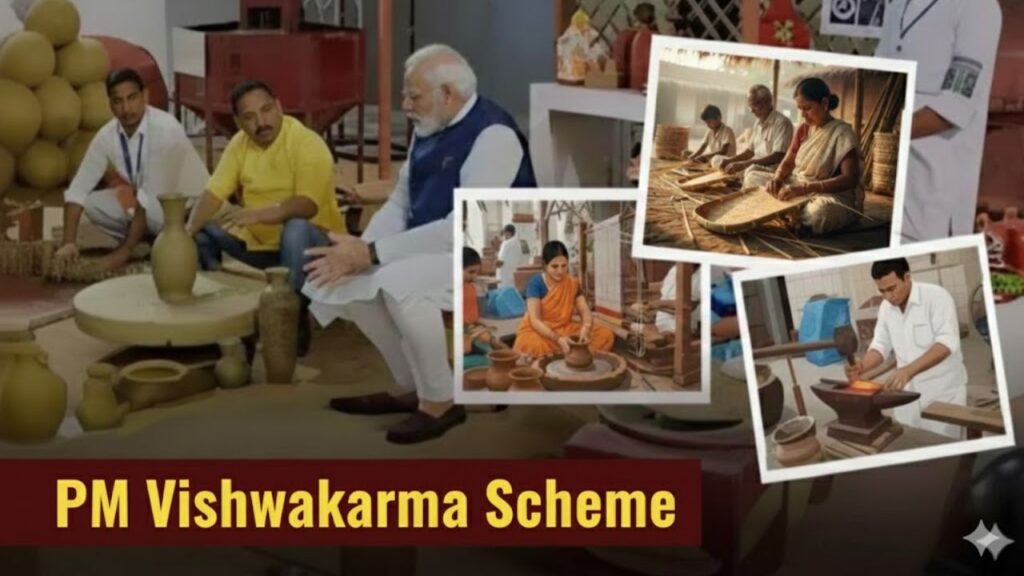
The Pradhan Mantri Vishwakarma Scheme is a flagship initiative of the Government of India aimed at empowering traditional artisans and craftsmen who work with their hands and tools. The scheme provides skill training, financial support, modern tools, and market access to help artisans strengthen their livelihoods and become self-reliant. This scheme focuses on preserving India’s rich traditional skills while integrating them with modern systems, digital payments, and organized markets. What Is the PM Vishwakarma Scheme? Launched on 17 September 2023, the PM Vishwakarma Scheme is a Central Sector Scheme implemented for an initial period of five years (2023–24 to 2027–28). It is administered by the Ministry of Micro, Small & Medium Enterprises (MSME). The scheme is designed specifically for artisans and craftspeople engaged in family-based traditional occupations in the unorganised sector. It aims to provide them with formal recognition, skill upgradation, financial assistance, and marketing support. Objective of the PM Vishwakarma Scheme The main objectives of the scheme include: PM Vishwakarma Scheme Overview Particulars Details Scheme Name Pradhan Mantri Vishwakarma Scheme Launch Date 17 September 2023 Implementing Ministry Ministry of MSME Duration 2023–24 to 2027–28 Target Group Traditional artisans & craftsmen Loan Amount Up to ₹3 lakh Interest Rate 5% Application Mode Through CSC Official Website pmvishwakarma.gov.in PM Vishwakarma Scheme Interest Rate Under the PM Vishwakarma Scheme, beneficiaries receive collateral-free enterprise development loans in two phases: Loan Amount Tenure ₹1 lakh 18 months ₹2 lakh 30 months The loans are provided at a concessional interest rate of 5%, while the remaining interest is subsidised by the Government of India (interest subvention of 8%). The first loan is available after completion of Basic Training, and the second loan is provided only after proper utilisation of the first loan, timely repayments, and adoption of digital transactions. Key Features of the PM Vishwakarma Scheme Benefits of the PM Vishwakarma Scheme The scheme offers multiple benefits to artisans and craftsmen: 1. Recognition Beneficiaries receive an official PM Vishwakarma Certificate and ID Card, helping them gain formal identity and access to benefits. 2. Skill Training 3. Toolkit Assistance An e-voucher worth up to ₹15,000 is provided at the beginning of basic training to purchase modern tools. 4. Credit Support Collateral-free loans of up to ₹3 lakh at a low interest rate of 5%. 5. Digital Transaction Incentive ₹1 per digital transaction, up to 100 transactions per month, for encouraging digital payments. 6. Marketing Support Assistance with branding, quality certification, advertising, and onboarding on e-commerce platforms like GeM. Eligibility Criteria for PM Vishwakarma Scheme To apply for the scheme, the applicant must meet the following conditions: Trades Covered Under PM Vishwakarma Scheme The scheme covers 18 traditional trades, including: Documents Required for PM Vishwakarma Scheme Applicants need the following documents: How to Apply for PM Vishwakarma Scheme The application process is carried out through Common Service Centres (CSC): The application goes through verification at the Gram Panchayat/ULB, District Committee, and Screening Committee levels. How to Check PM Vishwakarma Application Status Applicants can log in to the PM Vishwakarma portal using their registered details to track application status. Once approved, the Vishwakarma Certificate and ID Card can be downloaded from the portal. Final Thoughts The PM Vishwakarma Scheme is a transformative step towards supporting India’s traditional artisans by combining skill development, financial assistance, and market access. It not only preserves cultural heritage but also strengthens micro-enterprises and promotes employment generation. As the scheme expands, it is expected to play a vital role in improving income levels and ensuring long-term sustainability for artisans across the country.

Airtel Payments Bank
Banking

Airtel Payments Bank – Account Opening, Services, Benefits & How It Works

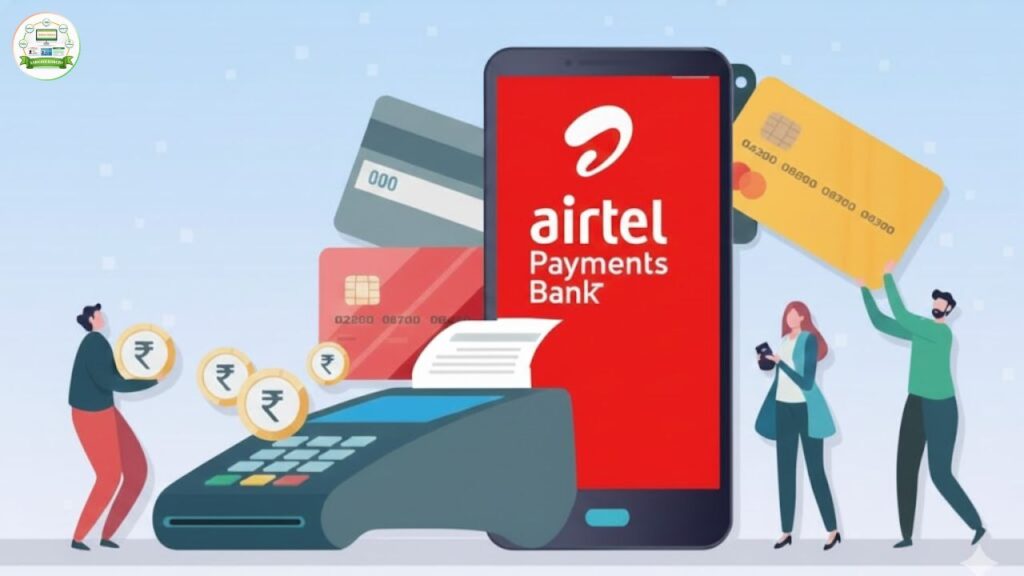
Airtel Payments Bank is a digital-first bank in India that offers safe, paperless, and easy banking services through your mobile phone. It was launched to promote financial inclusion and provide basic banking facilities to people who prefer simple, fast, and branch-light banking. From savings accounts and debit cards to bill payments and UPI, Airtel Payments Bank is designed for everyday financial needs—especially for users who want banking on the go. What Is Airtel Payments Bank? Airtel Payments Bank is a payments bank regulated by the Reserve Bank of India (RBI). Unlike traditional banks, payments banks focus on deposits, remittances, and digital payments. They do not offer loans or credit cards, but they provide secure savings accounts and transaction services. You can open an account instantly using Aadhaar-based eKYC, often at an Airtel Store or via assisted digital channels. Key Features of Airtel Payments Bank How to Open an Airtel Payments Bank Account Option 1: At an Airtel Store (Most Common) Option 2: Assisted Digital / Partner Points In some locations, trained agents help complete eKYC and account activation. Note: Full KYC is required to unlock all features. Documents Required Services Offered by Airtel Payments Bank 💸 Savings Account 📲 UPI & Money Transfer 💳 Debit Card 🧾 Bill Payments & Recharges 🏧 Cash Services Airtel Payments Bank Account Limits Completing full KYC increases usability and limits. Is Airtel Payments Bank Safe? Yes. Airtel Payments Bank is: Deposits are safeguarded under applicable regulatory norms for payments banks. Who Should Use Airtel Payments Bank? Pros and Cons ✅ Pros ❌ Cons Final Overview Airtel Payments Bank is a practical choice for users who want simple, secure, and mobile-first banking without the complexity of traditional banks. It works well for daily transactions, savings, and digital payments—especially in areas with limited bank branches. For more easy-to-understand guides on banks, digital payments, and financial services, many users prefer exploring clear explanations available on Sarkari Bakery to make informed decisions without confusion.

How to Make APAAR ID
APAAR ID

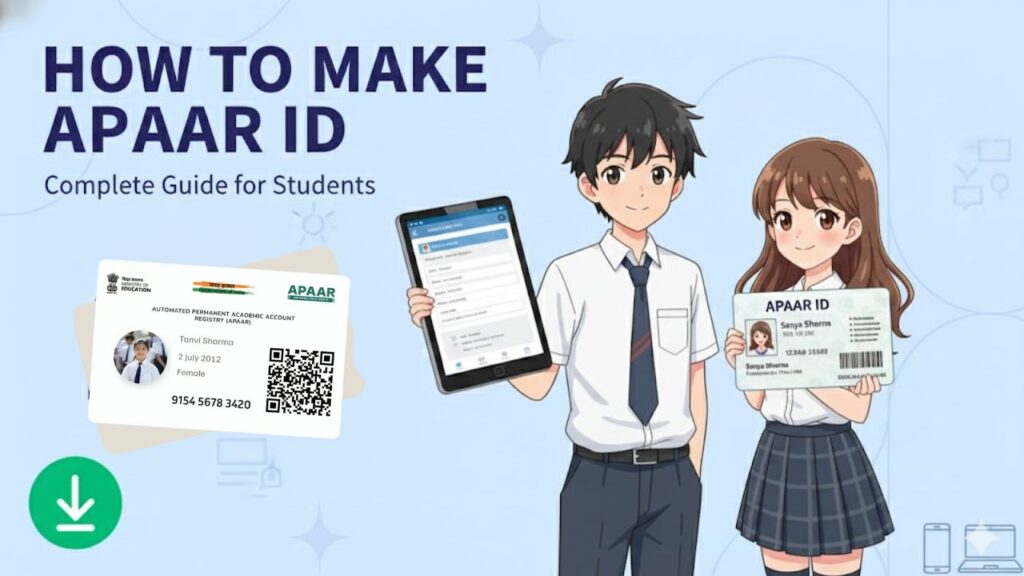
How to Make APAAR ID: Complete Step-by-Step Guide for Students & Parents

The education system in India is moving rapidly towards digital records and paperless verification. One of the most important initiatives in this direction is the APAAR ID (Automated Permanent Academic Account Registry ID). This unique academic identity allows students to store and manage their educational records securely throughout their academic life. If you are a student or a parent and want to understand how to make APAAR ID, why it is needed, and how it works, this detailed guide explains everything clearly in simple language. What Is APAAR ID? APAAR ID is a unique 12-digit academic identification number issued to students in India. It is designed to digitally record a student’s academic journey, starting from school to higher education. This ID is part of the National Education Policy (NEP 2020) initiative and is closely linked with the Academic Bank of Credits (ABC) system. Once created, the APAAR ID stays with the student for life and can be used to access academic records anytime. Why Is APAAR ID Important? APAAR ID helps bring all academic information to one secure platform. It removes the need to repeatedly submit physical certificates and marksheets during admissions or verifications. With APAAR ID, students can: Who Can Apply for APAAR ID? APAAR ID can be created for: For students below 18 years of age, parent or guardian consent is mandatory. Documents Required to Create APAAR ID Before the APAAR ID is generated, the following details are required: Ensuring that Aadhaar details match school records helps avoid delays. How to Make APAAR ID (Step-by-Step Process) APAAR ID creation is usually handled by the school or educational institution, not by the student individually. However, understanding the process helps students and parents track it easily. Step 1: School or Institution Registration The school or college registers students on the official APAAR or Academic Bank of Credits (ABC) platform. Step 2: Aadhaar-Based Verification The student’s Aadhaar details are entered and verified through OTP sent to the Aadhaar-linked mobile number. Step 3: Parent Consent (For Minors) If the student is under 18 years old, digital consent from a parent or guardian is collected using Aadhaar authentication. Step 4: Generation of APAAR ID Once verification and consent are complete, the system generates a unique APAAR ID for the student. Step 5: Confirmation and Access The APAAR ID is shared with the student through the school or institution. It is linked with the student’s academic profile for future use. How Students Can Check Their APAAR ID Students can check or access their APAAR ID through: Schools may also provide a printed or digital record of the APAAR ID. Is APAAR ID Mandatory? At present, APAAR ID is not compulsory, but it is highly recommended. The system is consent-based and designed to benefit students by simplifying academic processes. In the future, it may become essential for admissions, exams, and government education schemes. Common Problems and How to Avoid Them Some common issues during APAAR ID creation include mismatched Aadhaar details, inactive mobile numbers, or missing parent consent. To avoid problems: Final Thoughts APAAR ID is a major step toward a unified and digital academic ecosystem in India. It helps students manage their educational records securely and reduces paperwork at every stage of education. Understanding how APAAR ID works ensures that students and parents can coordinate smoothly with schools and avoid unnecessary confusion. For more simple and practical guides on education-related IDs, documents, and government processes, many readers prefer exploring clear explanations available on Sarkari Bakery.

Dwarka Sector 14 Metro Station
Metro Station

Dwarka Sector 14 Metro Station – Route, Gates, Facilities, Vegas Mall & Nearby Places

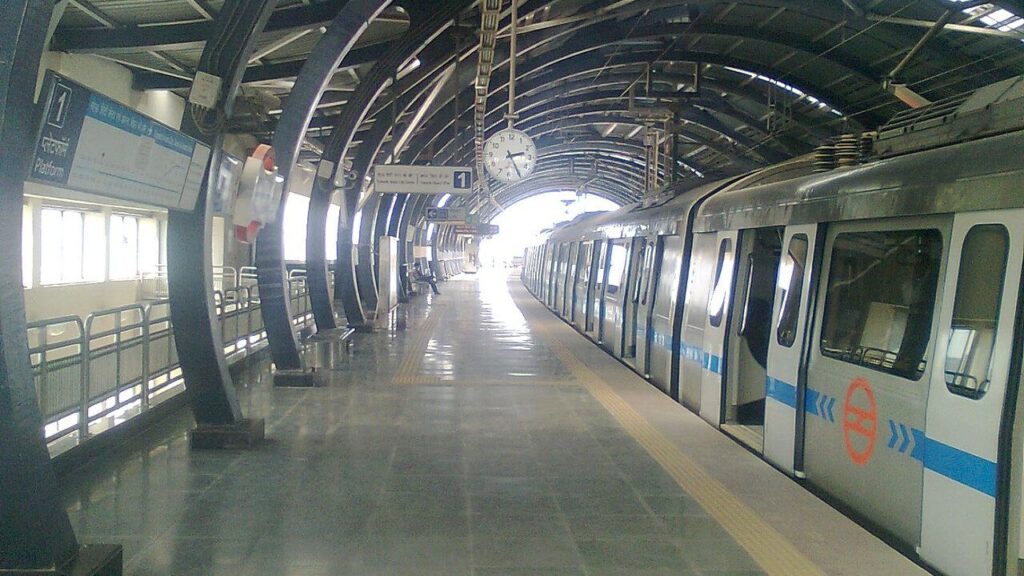
Dwarka Sector 14 Metro Station is a well-known station on the Blue Line of Delhi Metro, serving one of the most developed residential areas of South-West Delhi. This station is especially popular among daily office commuters, students, and shoppers, as it offers smooth connectivity to major parts of Delhi and NCR. One of the biggest highlights of this metro station is its close proximity to Vegas Mall, which has made the station even more important for leisure, shopping, movies, and dining. 📍 Location & Area Overview Dwarka Sector 14 Metro Station is located in the Dwarka sub-city of South-West Delhi. The station primarily caters to Sector 14 and nearby sectors such as Sector 13, Sector 12, and Sector 15. The area around the station is clean, well-planned, and residential, with easy access to schools, hospitals, markets, parks, and commercial complexes. 🚇 Metro Line & Route Details From Dwarka Sector 14, passengers can travel directly to Connaught Place, Noida, Janakpuri, and East Delhi without changing lines. 🏬 Vegas Mall – Major Attraction Near the Station One of the biggest advantages of Dwarka Sector 14 Metro Station is its easy access to Vegas Mall Dwarka. The mall is located at a short walking distance and is a major crowd-puller in the area. Vegas Mall offers: Because of Vegas Mall, the station remains busy even on weekends and holidays, especially in the evenings. 🚪 Entry & Exit Gates Dwarka Sector 14 Metro Station has multiple entry and exit gates, making movement easy and reducing congestion. The gates connect directly to: Each gate is equipped with ticket counters, smart card recharge machines, and security checks. 🛗 Facilities Available at the Station The station provides all essential Delhi Metro facilities for passenger comfort: The station is considered less crowded and more comfortable compared to central interchange stations. 🕒 Metro Timings (Approximate) Timings may slightly vary on Sundays and public holidays. 💰 Metro Fare Information Metro fare from Dwarka Sector 14 depends on the distance travelled: Passengers using Smart Cards get discounted fares compared to token users. 🚖 Last-Mile Connectivity From Dwarka Sector 14 Metro Station, commuters can easily find: This makes reaching nearby homes, offices, schools, and Vegas Mall very convenient. 🏘️ Nearby Places & Local Facilities Apart from Vegas Mall, the area around the station includes: Because of this balanced mix of residential and commercial spaces, the station area is considered highly livable. ✅ Why Dwarka Sector 14 Metro Station Is Important 📌 Final Overview Dwarka Sector 14 Metro Station is more than just a transit point. With its excellent Blue Line connectivity, organized surroundings, and the presence of Vegas Mall nearby, it has become one of the most convenient metro stations in Dwarka. For people living in Dwarka or visiting the area for shopping, entertainment, or work, this station offers a comfortable, time-saving, and reliable travel experience. For more such location-based guides and practical public information, many readers explore useful updates on Sarkari Bakery to stay informed.

Gazette Notification for Name Change
Documents

Gazette Notification for Name Change – Complete Process, Documents & Rules

A Gazette Notification for Name Change is the most authentic and legally accepted proof of a person’s name change in India. Whether you are changing your name after marriage, correcting a spelling mistake, adopting a new name, or changing your surname, a gazette notification officially records your new name in government records. Many government departments, banks, courts, passport offices, and educational institutions rely on the gazette notification as final legal evidence of a name change. What Is a Gazette Notification for Name Change? A gazette notification is an official publication issued by the Government of India or a State Government that publicly announces a person’s name change. Once published, the new name becomes legally valid and can be used across all official documents. After gazette publication, the old name and the new name are permanently linked in government records, making future verification easy and legally sound. When Is Gazette Notification Required? A gazette notification is required in many common situations, such as: While some private institutions may accept an affidavit or newspaper publication, government authorities usually demand a gazette notification. Gazette Notification vs Newspaper Name Change Many people confuse newspaper publication with gazette notification. Both are different. A newspaper advertisement is usually the first step and acts as public notice.A gazette notification is the final legal confirmation issued by the government. For passports, government jobs, and official records, gazette notification carries much higher legal value. Types of Gazette Notifications There are mainly two types of gazette notifications for name change: Central Gazette Issued by the Department of Publication, Government of India.Accepted nationwide and preferred for central government documents. State Gazette Issued by the respective State Government.Valid for state-level services and documents. Documents Required for Gazette Notification for Name Change To apply for a gazette notification, the following documents are generally required: Requirements may slightly vary between states or central gazette offices. Step-by-Step Process for Gazette Notification for Name Change Step 1: Prepare a Name Change Affidavit An affidavit is prepared on stamp paper stating the old name, new name, reason for change, and personal details. It must be notarized. Step 2: Newspaper Publication Publish the name change notice in one or two newspapers (regional and/or English), mentioning the old name and new name. Step 3: Apply for Gazette Notification Submit the application form along with documents to the State Gazette Office or Central Department of Publication. Step 4: Payment of Fees Pay the prescribed government fee through demand draft or online payment, depending on the authority. Step 5: Verification and Publication After verification, the name change is published in the official gazette. Step 6: Receive Gazette Copy You receive a physical or digital copy of the gazette notification, which serves as permanent legal proof. How Long Does Gazette Notification Take? The processing time usually ranges from 15 to 45 days, depending on the state, workload, and whether documents are complete and accurate. Is Gazette Notification Mandatory for Passport Name Change? In many cases, especially for complete name changes or major corrections, the passport office asks for a gazette notification. Minor spelling corrections may be accepted with an affidavit and newspaper publication, but a gazette notification avoids rejection and delays. Benefits of Gazette Notification for Name Change Common Mistakes to Avoid Accuracy is critical because once published, corrections are time-consuming. Final Words A Gazette Notification for Name Change is the safest and most reliable way to officially change your name in India. While the process may look lengthy, it protects you from future legal and documentation problems. For easy-to-understand government procedures, document guidance, and application help, many users rely on Sarkari Bakery to navigate such processes smoothly without confusion.

Application for TC
Letters

Application for TC for School Students (Transfer Certificate)

A Transfer Certificate (TC) is an official academic document issued by a school when a student leaves the institution permanently. It confirms that the student has studied in that school, completed the required formalities, and is no longer enrolled there. Whenever a student wants to take admission to a new school, college, or any other educational institution, a Transfer Certificate is usually mandatory. Without a TC, most schools and colleges do not allow admission because it serves as proof of a student’s academic history and formal exit from the previous institution. To obtain a Transfer Certificate, the student or the parent/guardian must submit a written application to the school principal or headmaster requesting the issuance of the TC. What Is a Transfer Certificate (TC)? A Transfer Certificate is a document provided by a school that contains important student details such as the student’s name, date of birth, class last attended, roll number, admission number, and the date of leaving the school. It also confirms that all school dues have been cleared and that the student has officially left the institution. In simple terms, a TC acts as a clearance certificate from the school. Why Is a Transfer Certificate Important? A Transfer Certificate is important for several reasons. It is required to continue education in another school or college, it prevents students from being enrolled in multiple institutions at the same time, and it helps maintain accurate academic records. For students completing Class 10 or Class 12, a TC becomes especially important because it is required for higher education admissions. When Do Students Need a Transfer Certificate? Students may need a Transfer Certificate in many situations, such as after completing Class 10 or Class 12, when parents are transferred to another city or state, when shifting to a different school board, or due to personal or medical reasons. In some cases, students also apply for a TC if they decide to discontinue schooling or take admission in a different institution. How to Write an Application for Transfer Certificate An application for a Transfer Certificate should always be written in a formal and respectful manner. The language should be polite, clear, and straightforward so that the school authorities can process the request without confusion. A good TC application clearly mentions the student’s details, the reason for leaving the school, and a polite request for issuing the certificate. Important Points to Include in a TC Application While writing an application for a Transfer Certificate, it is important to include the student’s full name, class and section, roll number and admission number (if available), and the genuine reason for requesting the TC. If the application is written by a parent, the parent’s name and contact details should also be included. It is also recommended to mention that all school fees and dues have been cleared. Application for TC for School Students (Simple Format) ToThe Principal[School Name][School Address] Date: __ / __ / ______ Subject: Application for Transfer Certificate Respected Sir/Madam, I respectfully state that I am a student of Class _________ Section _________ in your esteemed school. Due to __________________________ (reason such as family relocation / admission to another school / personal reasons), I will not be able to continue my studies in this institution. I kindly request you to issue my Transfer Certificate (TC) at the earliest. I confirm that all school dues have been cleared and all library books have been returned. I shall be very grateful to you for your kind support and cooperation. Thanking you. Yours sincerely,Name: __________________________Class & Section: ________________Roll No.: ______________________Admission No.: _________________ Application for TC by Parents for Changing School ToThe Principal[School Name][School Address] Date: __ / __ / ______ Subject: Request for Transfer Certificate of my child Respected Sir/Madam, I am writing this application to request the issuance of a Transfer Certificate for my child ______________________, who is currently studying in Class _________ at your school. Due to __________________________ (reason such as job transfer or relocation), it has become difficult for my child to continue studying in your institution. Therefore, we have decided to enroll them in a school closer to our new residence. I kindly request you to issue the Transfer Certificate at the earliest so that the admission process at the new school can be completed smoothly. All school dues have been cleared. Thanking you for your understanding and support. Yours sincerely,Parent/Guardian Name: ____________Student Name: ___________________Class: __________________________Contact Number: _________________ Application for TC Due to Transfer of Parents ToThe Principal[School Name][School Address] Date: __ / __ / ______ Subject: Application for Transfer Certificate Respected Sir/Madam, With due respect, I wish to inform you that my father/mother has been transferred to another city due to official reasons. Our family will be relocating shortly, and I will not be able to continue my studies at your school. I kindly request you to issue my Transfer Certificate at your earliest convenience. I confirm that all school dues have been settled. Thanking you. Yours sincerely,Name: __________________________Class: _________________________Roll No.: ______________________ Application for TC After Class 10 or Class 12 ToThe Principal[School Name][School Address] Date: __ / __ / ______ Subject: Request for Transfer Certificate Respected Sir/Madam, I respectfully inform you that I have successfully completed my Class _________ from your esteemed school. I now require my Transfer Certificate to proceed with admission to another institution for higher studies. I kindly request you to issue the Transfer Certificate along with any other necessary documents at the earliest. All school dues have been cleared. Thanking you in anticipation. Yours sincerely,Name: __________________________Class: _________________________Roll No.: ______________________ Final Note An Application for Transfer Certificate is a crucial document request in a student’s academic journey. Writing the application clearly and correctly helps avoid delays and ensures that the Transfer Certificate is issued smoothly. For more school-related applications, student formats, and easy academic guides, Sarkari Bakery provides simple and practical information to help students and parents complete their work without confusion.

Residential Address
Documents

🏠 Residential Address – Meaning, Importance, Accepted Documents & Complete Details

A Residential Address is one of the most commonly asked details in government forms, banking services, education applications, and online registrations. Despite being simple, many applications get delayed or rejected because people either misunderstand what a residential address is or submit the wrong supporting documents. Understanding residential address properly helps you avoid unnecessary errors and ensures smooth verification. 📌 What Is a Residential Address? A Residential Address is the actual place where a person currently lives on a regular basis.It refers to your present living location, not a business address or an office address. A residential address usually includes: 👉 Simply put, it is the address where you sleep, stay, and receive personal communication. ❓ Why Is Residential Address Important? Residential address is required because it helps authorities confirm where you live and which jurisdiction you fall under. It is important for: Many benefits and services are location-based, so an incorrect residential address can lead to rejection. 📄 Accepted Documents as Residential Address Proof Below are documents that are commonly accepted as valid residential address proof: ✅ Government-Approved Documents ✅ Utility Bills (Recent) (Usually must be issued within the last 2–3 months) ✅ Banking & Financial Documents ✅ Housing-Related Documents ✅ Employer / Institutional Proof (In Some Cases) ⚠️ Acceptance depends on the specific department or portal, but these are generally valid. ❌ Documents NOT Accepted as Residential Address Proof Many people upload documents that look genuine but are not accepted. Common examples include: 👉 These documents may show identity or date of birth, but not residential proof. 🔄 Residential Address vs Permanent Address Many forms ask for both. The difference is important. If both are the same, you can select “Same as Residential Address.”If different, you must provide separate details and documents. 🏢 Where Is Residential Address Required? Residential address is mandatory in many situations, such as: Even a small mismatch can cause verification failure. ⚠️ Common Mistakes People Make Avoid these frequent errors: These mistakes often lead to application rejection or delay. 🛠️ What If You Don’t Have Address Proof in Your Name? If you live in a rented house or with family: Always check the specific guidelines of the service you are applying for. 🎯 Tips for Using Residential Address Correctly 🏁 Final Understanding A Residential Address is not just a formality—it is a key detail used to verify your identity, location, and eligibility for services. Providing the correct address with valid supporting documents saves time and prevents unnecessary rejections. For simple explanations on document requirements, address proof rules, and government applications, Sarkari Bakery provides practical guidance that helps users complete their work without confusion.

Photo With Name And Date
How To

📸 Photo With Name and Date – Meaning, Importance, and Where It Is Required

In today’s digital and paperless environment, many government departments, banks, and online platforms ask applicants to upload a Photo With Name and Date. While it may look like a small requirement, ignoring it often leads to application rejection or delays. Understanding what this photo actually means, why authorities insist on it, and where it is commonly required can save time and unnecessary trouble. 📌 What Is a Photo With Name and Date? A Photo With Name and Date is a recent photograph of an individual that clearly shows: The date usually represents: This format helps verify that the photo is recent, genuine, and belongs to the applicant. ❓ Why Is a Photo With Name and Date Important? Authorities request this type of photo for several practical and security-related reasons. ✅ Identity Confirmation When a name is displayed along with the photo, it becomes easier to confirm that the image belongs to the same person submitting the application. ✅ Proof of Recent Photograph The date ensures that an old or reused photo is not being submitted for a new application. ✅ Prevention of Fraud Photos without dates can be reused multiple times. A dated photo reduces the chances of impersonation or misuse. ✅ Transparency in Online Applications Digital systems rely on such checks to ensure that applications are submitted by real individuals and not through copied or manipulated documents. 🏛️ Where Is Photo With Name and Date Required? This type of photo is commonly required across many sectors. 📄 Government Schemes and Welfare Programs 🪪 Document Correction and Updates 🏫 Education-Related Applications 🏦 Banking and Financial Services 💻 Online Portals and Digital Services 📸 How Should a Photo With Name and Date Look? To avoid rejection, the photo should meet basic quality standards: ⚠️ Common Mistakes to Avoid Many applications are rejected due to simple photo-related errors, such as: Avoiding these mistakes increases approval chances significantly. 🛠️ How Can You Create a Photo With Name and Date? Creating this type of photo is now easy and accessible. You can use: These tools allow you to add your name and date neatly without affecting photo clarity. 🎯 Benefits of Using a Proper Photo With Name and Date 🏁 Final Thoughts A Photo With Name and Date is more than just a photograph—it acts as a quick identity and authenticity check for authorities. Whether you are applying for a government scheme, updating documents, or submitting an online form, providing the correct photo format helps ensure a smooth and hassle-free process. For easy explanations on government applications, document requirements, and digital tools, visit Sarkari Bakery, where complex procedures are explained in a simple and practical manner.

Scroll to Top