Banking

wrong upi transaction
Banking

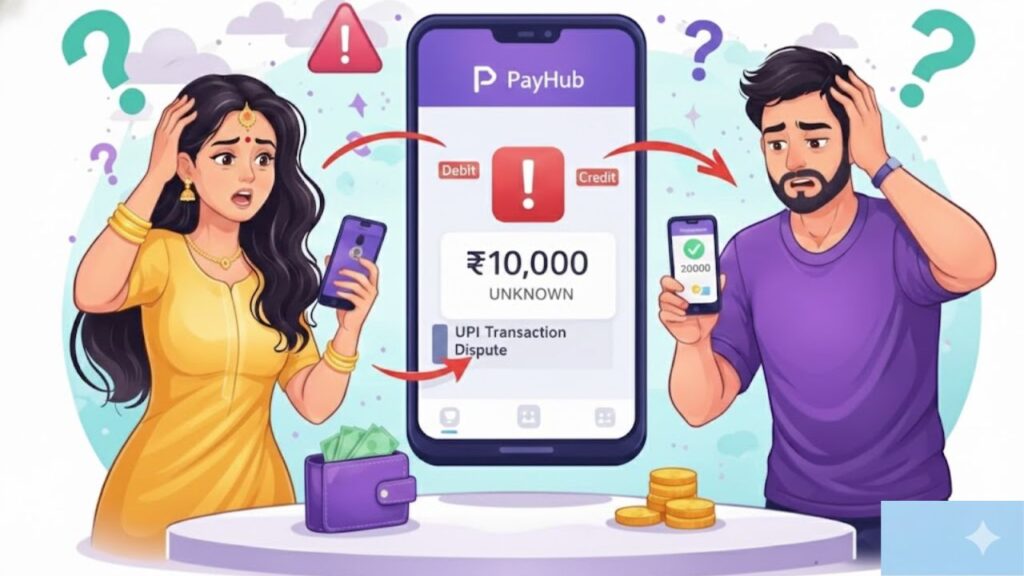
How to Reverse a Wrong UPI Transaction in India: Step-by-Step Recovery Guide

Sending money through UPI is fast and convenient, but that speed can turn stressful when funds are transferred to the wrong person. This usually happens due to a typing mistake, selecting the wrong contact, or reacting too quickly to a payment request. Many users panic because UPI payments feel “instant and final”, but Indian banking rules do provide ways to report and possibly recover such transactions—if you act correctly and on time. This guide explains, in clear and practical terms, how to reverse a wrong UPI transaction in India, what usually works, what does not, and what to do if the money is not returned. ⭐ What Is a Wrong UPI Transaction? A wrong UPI transaction happens when money is transferred to an unintended UPI ID, mobile number, or bank account. Once the payment is completed, UPI does not automatically reverse it like a failed transaction. Common causes include: Under RBI guidelines, the responsibility to verify details before sending money lies with the sender. However, banks and UPI platforms are required to offer grievance redressal mechanisms. ⭐ What to Do Immediately After a Wrong UPI Transfer Time matters more than anything else. The first 24–48 hours are critical. Act fast and collect details Keep these ready: The sooner you report the issue, the higher the chance of recovery—especially if the recipient has not yet withdrawn or used the money. ⭐ Raise a Complaint Through Your UPI App Most UPI apps have an in-app dispute option. This should always be your first step. How it usually works Once submitted, the app forwards the issue to your bank. The bank then contacts the recipient’s bank to request consent for reversal. Important reality check: banks cannot debit the recipient’s account without consent unless fraud is legally proven. ⭐ Contact Your Bank Directly If the app response is slow, contact your bank’s customer care or visit the branch. Provide: Banks log the complaint internally and coordinate with the receiving bank. This step is essential if the amount is large. ⭐ Call the NPCI UPI Helpline NPCI operates the UPI system in India. UPI Wrong Transaction Complaint Number:1800-120-1740 This helpline can: It does not directly reverse money but ensures your complaint reaches the right system. ⭐ Use the NPCI Online Grievance Portal If your issue remains unresolved for up to 30 days, escalate it online. You will need: Always save the complaint reference number. This becomes important if further escalation is required. ⭐ Escalate to RBI Ombudsman (Last Formal Step) If neither the bank nor NPCI resolves the issue within 30 days, you can file a complaint with the RBI Banking Ombudsman through the RBI CMS portal. This is useful when: RBI intervention often speeds up stalled cases, especially when procedural lapses are involved. ⭐ Real-Life Situations Where Reversal Becomes Difficult Understanding these scenarios helps set realistic expectations. Mistyped number If the recipient is genuine but refuses to return the money, banks have limited authority unless fraud is involved. Fraud or scam In cases of impersonation or fake requests, recovery is harder. Filing a police complaint strengthens your case. Technical glitch Sometimes money is credited to the wrong account due to system errors. These cases have a higher chance of reversal if reported early. ⭐ When Legal Action Is an Option If the amount is significant and the recipient refuses to cooperate: This is usually effective when there is clear evidence of fraud or intentional misuse. ⭐ Common Mistakes That Reduce Recovery Chances Avoid these errors: Many users lose recovery chances simply because they stop after the first complaint. ⭐ How to Prevent Wrong UPI Transactions in the Future UPI is safe—but only when used carefully. Practical safety habits If you frequently use UPI, it also helps to understand daily limits and safeguards explained in UPI limits. Fraud awareness is equally important. Knowing how fake requests work can save you from losses, as explained in fake UPI payments. ⭐ What If the Money Is Not Recovered? Sometimes, despite all efforts, recovery may not be possible. This usually happens when: In such cases, prevention and awareness become the only long-term solutions. ⭐ Final Thoughts A wrong UPI transaction is stressful, but it does not always mean your money is lost forever. Quick action, proper escalation, and correct documentation significantly improve recovery chances. Always start with the UPI app, involve your bank, use NPCI support, and escalate to RBI if required. At the same time, building careful payment habits is the strongest defence against such errors. For more clear, practical guides on banking, digital payments, and government processes, visit Sarkari Bakery. Frequently Asked Questions
IFSC Code of State Bank of India
Banking

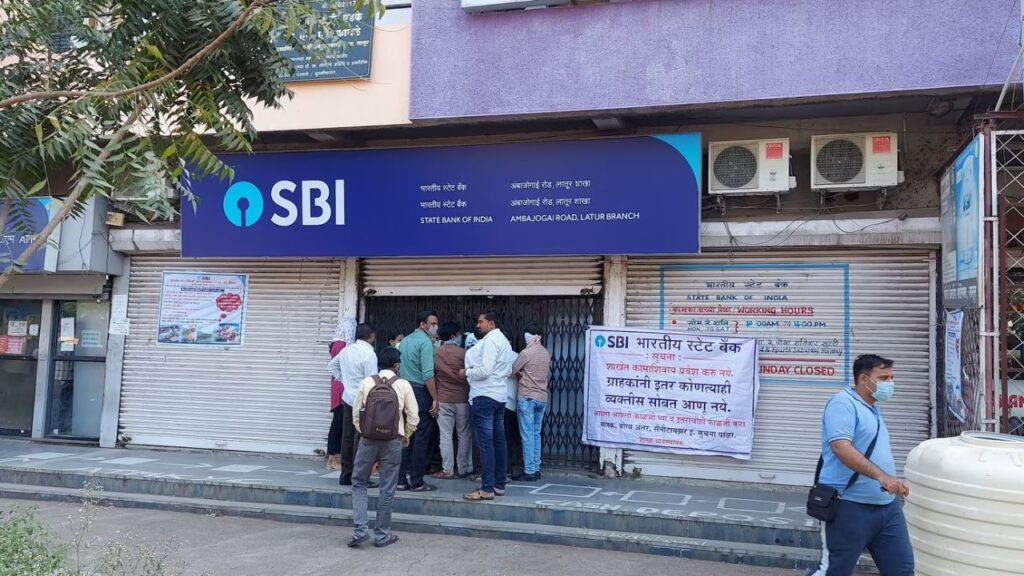
IFSC Code of State Bank of India, Baba Bakala, Punjab – Branch Details & Usage Guide

When you need to send or receive money through NEFT, RTGS, or IMPS, the IFSC code becomes mandatory. Many people search for the IFSC code of their local bank branch to avoid transaction failures, delays, or incorrect transfers. If your account is linked to the Baba Bakala branch, this guide gives you verified branch details, explains why IFSC is important, and shows how to use it safely. ⭐ SBI Baba Bakala IFSC Code Details Here are the complete and accurate banking details for the Baba Bakala branch: Particular Details Bank Name State Bank of India Branch Name Baba Bakala IFSC Code SBIN0050310 MICR Code 143002504 Branch Code 050310 City/Town Baba Bakala District Amritsar State Punjab Address VPO Baba Bakala Phone Number 245234 Important: Always double-check the IFSC code before confirming any transaction. A single wrong character can cause payment failure or delays. ⭐ What Is an IFSC Code and Why It Matters? IFSC (Indian Financial System Code) is an 11-character alphanumeric code assigned by the Reserve Bank of India (RBI) to identify each bank branch uniquely. It is required for: Without the correct IFSC, online or offline fund transfers cannot be processed. ⭐ IFSC Code Format Explained (SBIN0050310) Understanding the format helps you identify fake or incorrect codes: Position Meaning First 4 characters Bank code (SBIN = State Bank of India) 5th character Always 0 (reserved for future use) Last 6 characters Branch code (050310 = Baba Bakala) This structure ensures that every branch in India has a unique digital identity. ⭐ What Is MICR Code and Where Is It Used? MICR (Magnetic Ink Character Recognition) code is mainly used for cheque processing. It helps banks clear cheques faster and reduces errors. You will usually find the MICR code: For SBI Baba Bakala, the MICR code is 143002504. ⭐ Uses of IFSC Code in Daily Banking The IFSC code is required in multiple situations, such as: Even mobile banking and net banking platforms validate IFSC codes before allowing transactions. ⭐ How to Find IFSC Code of Any Bank Branch You can easily find the IFSC code using these reliable methods: Avoid using random third-party websites without verification. ⭐ Common Mistakes to Avoid While Using IFSC Codes Many transaction failures happen due to small but avoidable errors: Tip: Always copy IFSC from a trusted source or your bank records. ⭐ Nearby SBI Branches in Baba Bakala Currently, no other State Bank of India branches are listed nearby for Baba Bakala. Customers are advised to use online banking services or visit the same branch for in-person services. ⭐ Conclusion Knowing the correct IFSC code of SBI Baba Bakala ensures smooth and error-free banking transactions. Whether you are transferring money, setting up auto-debits, or receiving payments, accurate bank details save time and prevent failed transactions. Always verify IFSC and MICR codes from reliable sources before initiating any transfer. For more verified bank codes, certificates, and government-related guides, visit Sarkari Bakery. ❓ Frequently Asked Questions

Digital Currency in India
Banking

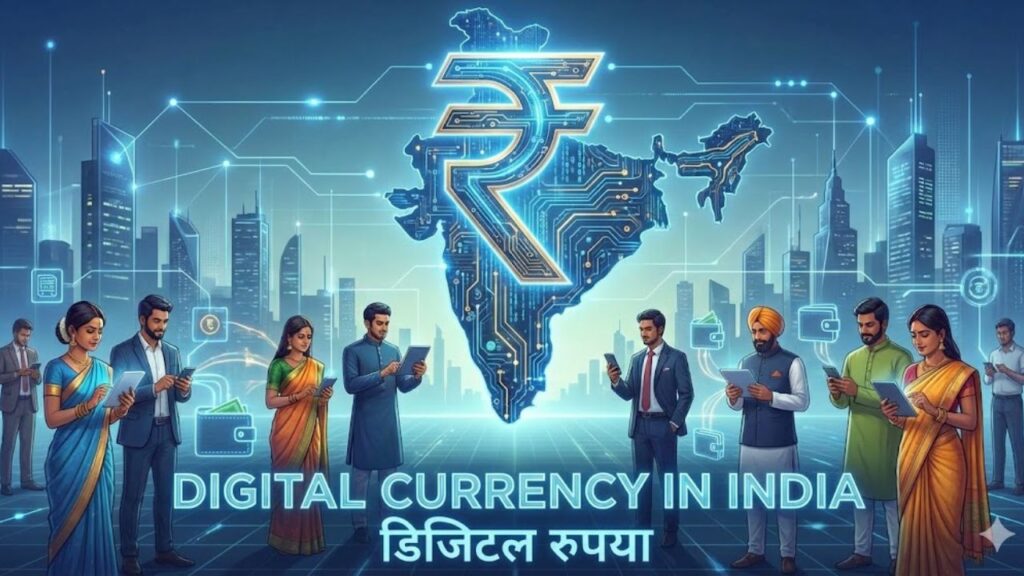
Digital Currency in India: Name, Meaning, Features & Advantages Explained Clearly

India has seen a massive shift from cash-based transactions to digital payments over the last decade. UPI, mobile banking, and online wallets have already changed how people pay. To take this transformation one step further, the Government of India and the Reserve Bank of India (RBI) introduced digital currency, officially known as the Digital Rupee. Many people search for this topic because they are confused about what digital currency actually is, how it is different from UPI or cryptocurrency, and whether it is safe to use. This guide explains everything in a clear, practical way without technical jargon. ⭐ What Is Digital Currency? Digital currency is money issued by a central bank in electronic form. In India, this currency is called the Digital Rupee and is officially known as Central Bank Digital Currency (CBDC). Unlike private digital wallets or payment apps, the Digital Rupee is: In simple terms, ₹1 Digital Rupee = ₹1 paper rupee. It is not an investment product and does not fluctuate like crypto assets. ⭐ Name of Digital Currency in India The official name is: RBI has introduced two versions: ⭐ How Digital Currency Works in Real Life The Digital Rupee works through a wallet-based system provided by RBI-authorised banks. Here’s how a typical transaction happens: Unlike UPI, transactions do not always require a bank account for settlement, which makes it closer to digital cash than online banking. ⭐ Key Features of Digital Rupee 🔐 Sovereign-Backed Currency The Digital Rupee is issued and regulated by RBI, making it fully legal tender. ⚡ Instant Settlement Transactions settle immediately without clearing delays or interbank dependency. 🧾 Cash-Like Privacy (With Control) It offers controlled traceability, helping prevent illegal activities while maintaining user trust. 🌐 Offline Potential RBI is testing offline usage for areas with weak internet connectivity. 🏦 No Dependency on Wallet Balance Unlike prepaid wallets, CBDC represents actual money, not stored value. ⭐ Advantages of Digital Currency in India ✅ Safer Than Physical Cash No risk of theft, damage, or loss like paper notes. ✅ Lower Cost for Government Reduces printing, storage, transportation, and replacement costs of currency. ✅ Faster Payments Useful for peer-to-peer, business, and government transactions. ✅ Better Transparency Helps reduce black money, fake currency, and tax leakage. ✅ Financial Inclusion People without full banking access can still participate in digital transactions. CBDC usage also complements existing banking KYC systems and digital identity frameworks already used across India. ⭐ Digital Currency vs Cryptocurrency Many people wrongly assume Digital Rupee is similar to Bitcoin. It is not. Aspect Digital Currency Cryptocurrency Issuer RBI Private networks Regulation Fully regulated Largely unregulated Value Stability Stable Highly volatile Legal Status Legal tender Not legal tender Risk Level Low High Digital Rupee focuses on payments, not speculation. ⭐ Digital Rupee Launch in India The rollout started with selected banks and cities and is being expanded gradually based on user feedback and system readiness. ⭐ Is Digital Rupee Based on Blockchain? RBI has not confirmed a public blockchain structure like cryptocurrencies.Instead, the system may use controlled ledger technology, allowing RBI to maintain security, efficiency, and scalability without decentralised risk. ⭐ Common Misunderstandings About Digital Currency Most confusion arises when people mix payment apps with currency issuance. ⭐ Who Should Use Digital Rupee? 🔚 Conclusion Digital currency in India is a major step toward a more transparent, efficient, and inclusive financial system. The Digital Rupee combines the trust of physical cash with the convenience of digital payments, without the risks associated with private cryptocurrencies. As adoption grows, it is expected to strengthen India’s digital economy while keeping monetary control firmly with the RBI. For clear, reliable explanations on government-backed financial systems and digital services, visit Sarkari Bakery. ❓ Frequently Asked Questions

Airtel Payments Bank
Banking

Airtel Payments Bank – Account Opening, Services, Benefits & How It Works

Airtel Payments Bank is a digital-first bank in India that offers safe, paperless, and easy banking services through your mobile phone. It was launched to promote financial inclusion and provide basic banking facilities to people who prefer simple, fast, and branch-light banking. From savings accounts and debit cards to bill payments and UPI, Airtel Payments Bank is designed for everyday financial needs—especially for users who want banking on the go. What Is Airtel Payments Bank? Airtel Payments Bank is a payments bank regulated by the Reserve Bank of India (RBI). Unlike traditional banks, payments banks focus on deposits, remittances, and digital payments. They do not offer loans or credit cards, but they provide secure savings accounts and transaction services. You can open an account instantly using Aadhaar-based eKYC, often at an Airtel Store or via assisted digital channels. Key Features of Airtel Payments Bank How to Open an Airtel Payments Bank Account Option 1: At an Airtel Store (Most Common) Option 2: Assisted Digital / Partner Points In some locations, trained agents help complete eKYC and account activation. Note: Full KYC is required to unlock all features. Documents Required Services Offered by Airtel Payments Bank 💸 Savings Account 📲 UPI & Money Transfer 💳 Debit Card 🧾 Bill Payments & Recharges 🏧 Cash Services Airtel Payments Bank Account Limits Completing full KYC increases usability and limits. Is Airtel Payments Bank Safe? Yes. Airtel Payments Bank is: Deposits are safeguarded under applicable regulatory norms for payments banks. Who Should Use Airtel Payments Bank? Pros and Cons ✅ Pros ❌ Cons Final Overview Airtel Payments Bank is a practical choice for users who want simple, secure, and mobile-first banking without the complexity of traditional banks. It works well for daily transactions, savings, and digital payments—especially in areas with limited bank branches. For more easy-to-understand guides on banks, digital payments, and financial services, many users prefer exploring clear explanations available on Sarkari Bakery to make informed decisions without confusion.

IFSC Code of Assam Gramin Vikash Bank
Banking

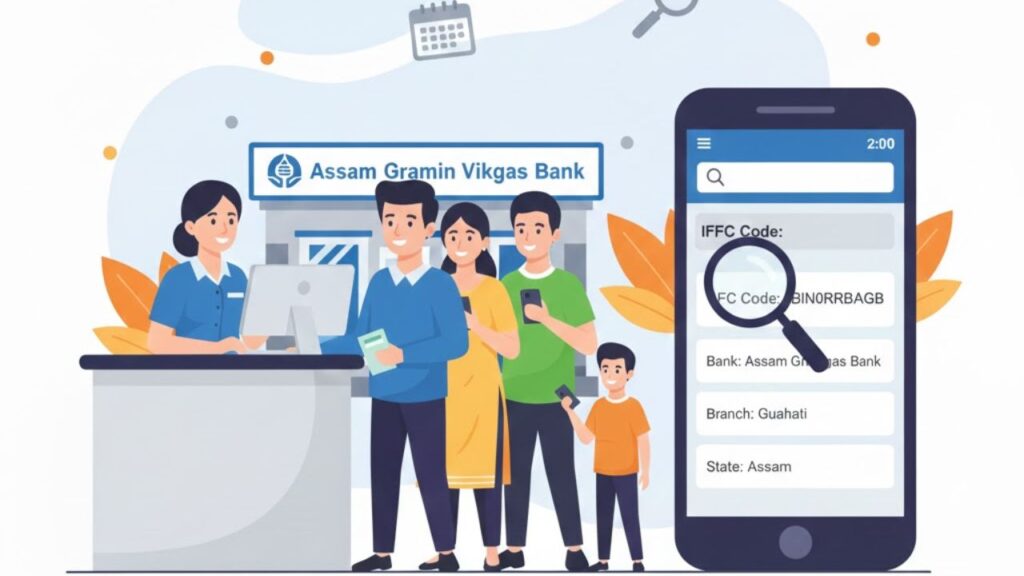
IFSC Code of Assam Gramin Vikash Bank, Assam Gramin Vikash Bank IMPS, Guwahati, Assam

If you are searching for the IFSC code of Assam Gramin Vikash Bank IMPS branch, then this page provides complete and accurate details. IFSC code is a mandatory requirement for online fund transfers through NEFT, RTGS, and IMPS. Using the correct IFSC ensures that your money is transferred safely and reaches the correct bank branch without delay. Below, you will find full branch details including IFSC code, MICR code, address, district, and other important banking information related to Assam Gramin Vikash Bank IMPS, Guwahati. Assam Gramin Vikash Bank IMPS – Branch Details Here are the official IFSC and MICR details of Assam Gramin Vikash Bank IMPS: Bank Name Assam Gramin Vikash Bank Branch Name Assam Gramin Vikash Bank IMPS IFSC Code PUNB0RRBAGB MICR Code N/A Branch Code RRBAGB (Last six characters of IFSC) City Guwahati District Kamrup Metropolitan State Assam Address Head Office, G.S. Road, Bhangagarh, Guwahati – 781001, Assam Phone Number N/A This IFSC code is mainly used for IMPS and NEFT transactions handled through the centralized system of Assam Gramin Vikash Bank. What is IFSC Code and Why is it Required? The Indian Financial System Code (IFSC) is an 11-character alphanumeric code issued by the Reserve Bank of India (RBI). It uniquely identifies every bank branch in India and is essential for electronic fund transfers. An IFSC code is required for: Without a valid IFSC code, banks cannot process electronic transactions correctly. How to Find IFSC Code of a Bank Branch? You can easily find the IFSC code of any bank branch using the following methods: Uses of IFSC Code IFSC code plays a crucial role in banking operations. Some common uses include: Format of IFSC Code Explained An IFSC code consists of 11 characters, structured in the following way: Position Meaning 1–4 Bank Code 5 Zero (0), reserved for future use 6–11 Branch Code Example: PUNB0RRBAGB How to Find MICR Code? MICR (Magnetic Ink Character Recognition) code is mainly used for cheque clearing. You can find the MICR code by: For Assam Gramin Vikash Bank IMPS, Guwahati, the MICR code is not available (N/A) as it is a centralized IMPS branch. Nearby Assam Gramin Vikash Bank Branches Currently, no nearby branches are listed for Assam Gramin Vikash Bank IMPS, Guwahati. Conclusion The IFSC code PUNB0RRBAGB belongs to Assam Gramin Vikash Bank IMPS, Guwahati, and is required for online fund transfers such as NEFT and IMPS. Always verify the IFSC code before initiating any transaction to ensure smooth and error-free money transfers. For more easy-to-understand banking and government-related guides, visit Sarkari Bakery. Frequently Asked Questions (FAQs)
IFSC Code of Sarva Haryana Gramin Bank
Banking

IFSC Code of Sarva Haryana Gramin Bank, Sarva Haryana Gramin Bank IMPS, Rohtak, Delhi

If you are looking for the IFSC code of Sarva Haryana Gramin Bank IMPS branch, then this guide will help you with complete and accurate details. IFSC code is an essential requirement for online fund transfers such as NEFT, RTGS, and IMPS. Without the correct IFSC code, money transfers cannot be processed successfully. Below, you will find complete bank details including IFSC code, MICR code, branch address, district, and other important information related to Sarva Haryana Gramin Bank IMPS, Rohtak. Sarva Haryana Gramin Bank IMPS – Branch Details Here are the official IFSC and MICR details of Sarva Haryana Gramin Bank IMPS: This IFSC code is mainly used for IMPS and NEFT centralized transactions handled by Sarva Haryana Gramin Bank. What is IFSC Code and Why is it Important? The Indian Financial System Code (IFSC) is an 11-character alphanumeric code issued by the Reserve Bank of India (RBI) to identify every bank branch in India. An IFSC code is mandatory for: Without a valid IFSC code, banks cannot identify the destination branch correctly. How to Find IFSC Code of a Bank Branch? You can easily find the IFSC code of any bank branch using the following methods: Uses of IFSC Code The IFSC code plays a vital role in banking and financial transactions. Some major uses include: Format of IFSC Code Explained An IFSC code consists of 11 characters, structured as follows: Position Description 1–4 Bank Code 5 Zero (0) – reserved for future use 6–11 Branch Code Example: PUNB0HGB001 How to Find MICR Code? MICR (Magnetic Ink Character Recognition) code is mainly used for cheque processing. You can find the MICR code by: For Sarva Haryana Gramin Bank IMPS, Rohtak, the MICR code is not available (NA) as it is a centralized processing branch. Nearby Sarva Haryana Gramin Bank Branches Currently, no nearby branches are listed for Sarva Haryana Gramin Bank IMPS, Rohtak. Conclusion The IFSC code PUNB0HGB001 belongs to Sarva Haryana Gramin Bank IMPS, Rohtak and is mainly used for NEFT and IMPS transactions processed through the centralized system. Before initiating any bank transfer, always double-check the IFSC code to avoid failed or delayed transactions. For more easy-to-understand banking and government-related guides, visit Sarkari Bakery. Frequently Asked Questions (FAQs)
Dakshin Bihar Gramin Bank
Banking

Dakshin Bihar Gramin Bank – Branch Details, IFSC Code, IMPS, MICR & How to Find Your Code

The Dakshin Bihar Gramin Bank (DBGB) plays a major role in providing rural and semi-urban banking services across Bihar. Whether you are sending funds through IMPS, NEFT, or RTGS, you must enter the correct IFSC code to ensure that your money reaches the right branch. This article explains the official IFSC code of Dakshin Bihar Gramin Bank’s Patna IMPS branch, how the IFSC and MICR codes work, where to find them, and more. ✅ Dakshin Bihar Gramin Bank IFSC Code – Patna IMPS Branch Here are the complete verified details: Detail Information Bank Name Dakshin Bihar Gramin Bank Branch Name Dakshin Bihar Gramin Bank IMPS IFSC Code PUNB0MBGB06 MICR Code 800811002 Branch Code MBGB06 City Patna District Patna State West Bengal (as per database entry) Address NEFT Centralized Processing Centre, Madhya Bihar Gramin Bank, Meena Plaza, South of Museum, Patna – 800001 Phone Number Not Available This IFSC must be used whenever you transfer funds to this specific DBGB branch. ⭐ What Does the IFSC Code Mean? Indian Financial System Code (IFSC) is an 11-character alphanumeric code assigned by the Reserve Bank of India to every bank branch. Format: Meaning: For PUNB0MBGB06: This structure ensures accuracy during fund transfers. ⭐ Why the IFSC Code Is Important You need the IFSC code for: ✔ Sending money through NEFT NEFT transfers require bank name + account number + IFSC. ✔ RTGS transactions Used for high-value transfers of ₹2 lakh and above. ✔ IMPS transfers Immediate fund transfer using: ✔ Bill payments & UPI Online platforms also reference IFSC for backend verification. ✔ Receiving money Anyone sending you money must enter your IFSC correctly. A wrong IFSC can cause: Thus, IFSC ensures quick, error-free banking. ⭐ How to Find Dakshin Bihar Gramin Bank IFSC Code? Here are the simplest ways: 1. On Chequebook Every cheque leaf contains the IFSC code printed at the top. 2. On Passbook The first page will show: 3. On RBI Website RBI issues and maintains every IFSC code. 4. Dakshin Bihar Gramin Bank’s Official Website 5. Internet / Mobile Banking App When initiating a transfer, IFSC automatically appears. 6. Google Search Searching the branch name + “IFSC” shows instant results. ⭐ What is MICR Code & Why It’s Used? MICR Code: 800811002MICR stands for Magnetic Ink Character Recognition. It is used for: You can find the MICR code: ⭐ Branch Details Explained in Depth ✔ Location The branch processes NEFT & IMPS payments centrally for DBGB.Situated at:Meena Plaza, South of Museum, Patna 800001 ✔ Services Offered ✔ Nearby Branches Database currently shows no nearby branches listed, but DBGB operates across multiple districts in Bihar. If you want, I can prepare a table of all nearby DBGB branches for SEO—just tell me. ⭐ Understanding IMPS (Used by this Branch) IMPS (Immediate Payment Service) allows: To send IMPS to this branch, you need: ⭐ Customer Use Case Example Example 1: Sending Money to Patna Branch A user wants to transfer ₹20,000 through NEFT: With correct IFSC, the money reaches instantly (IMPS) or within a few hours (NEFT). Example 2: IMPS Failed? If IFSC is wrong, the transfer will be rejected, and refund may take 24–48 hours. ⭐ FAQs — Dakshin Bihar Gramin Bank IFSC Code 1. What is the IFSC code of Dakshin Bihar Gramin Bank Patna IMPS branch? PUNB0MBGB06 2. Is this IFSC required for all online transfers? Yes. It’s mandatory for IMPS, NEFT, and RTGS. 3. Where is this branch located? Meena Plaza, South of Museum, Patna – 800001. 4. What is the MICR code? 800811002 5. Can I find the IFSC on my cheque? Yes. It is printed on every cheque leaf. 6. Who issues the IFSC code? The Reserve Bank of India (RBI). 7. Can IFSC code change? Yes, if banks merge or restructure. Always check before transferring.

Madhyanchal Gramin Bank
Banking

Madhyanchal Gramin Bank – IFSC Code, Format, Uses & Account Opening Details

The IFSC Code (Indian Financial System Code) is a crucial identifier used for sending money online through NEFT, RTGS, and IMPS. Every bank branch in India has its own unique IFSC code, including Madhyanchal Gramin Bank, which operates across multiple districts in Madhya Pradesh. Understanding the IFSC code makes fund transfers safer, faster, and error-free. Let’s explore the IFSC code format, how to find your branch code, and other essential banking information. What is the IFSC Code of Madhyanchal Gramin Bank? The Madhyanchal Gramin Bank IFSC code is an 11-character alphanumeric code assigned to each branch.Its structure is always the same: Example:If the IFSC code looks like XXXX0YYYYYY, This unique code ensures the money reaches the correct branch during online fund transfers. How to Find the IFSC Code of Madhyanchal Gramin Bank? There are several easy ways to search your branch’s IFSC code: 1. On Your Bank Passbook The first or second page of your passbook contains: 2. On Your Chequebook Each cheque leaf displays the IFSC code on the top of the page. 3. Through Online Search You can search by: 4. Through Internet Banking Apps Most digital banking apps show: An IFSC code is mandatory for sending money via: Without it, the transaction will not be processed. Information Needed for Transferring Money To transfer funds to any Madhyanchal Gramin Bank account holder, you need: Providing accurate IFSC ensures: How to Open an Account in Madhyanchal Gramin Bank Madhyanchal Gramin Bank offers savings, current, and deposit accounts for individuals, businesses, farmers, and pensioners. Eligibility Criteria You can open an account if: Documents Required (KYC) You must submit: Identity Proof (Any One) Address Proof (Any One) Other Documents Once documents are verified and the first deposit is made, the bank activates the account. Frequently Asked Questions (FAQs) 1. What is the eligibility for opening a Madhyanchal Gramin Bank account? Any Indian citizen aged 18+ with valid identity and address proof can open an account. Minors need a guardian. 2. What documents are needed for account opening? Aadhaar, PAN, voter ID, passport, photos, and address proof. 3. What details are required to transfer funds? Amount, sender account number, receiver name, bank, account number, and the branch IFSC code.

Jio Payments Bank
Banking

⭐ IFSC Code of Jio Payments Bank, Jio Payments Bank IMPS Branch – Maharashtra

If you are looking for the IFSC Code of Jio Payments Bank IMPS Branch in Navi Mumbai, Maharashtra, here is the complete and updated information including IFSC, branch details, MICR status, address, and how to use the code for online fund transfers. This guide will also help you understand the importance of IFSC codes, how to find them, and their role in NEFT, RTGS, and IMPS transactions. ⭐ Jio Payments Bank IMPS Branch – IFSC & MICR Codes Details Information Bank Name JIO PAYMENTS BANK Branch Name Jio Payments Bank IMPS IFSC Code JIOP0000001 MICR Code NA Branch Code 000001 City Navi Mumbai District Mumbai State Maharashtra Address Reliance Corporate Park, Ghansoli, Navi Mumbai, Maharashtra, India Phone Number NA 👉 This is the only IFSC code currently available for Jio Payments Bank, as the bank operates digitally without traditional physical branches. ⭐ What Is an IFSC Code and Why Is It Important? IFSC (Indian Financial System Code) is an 11-character alphanumeric code allotted by the Reserve Bank of India (RBI) to identify all bank branches participating in electronic fund transfers. You need a valid IFSC code to send money via: Without the correct IFSC, your payment will fail or be delayed. ⭐ How to Find IFSC Code of Any Bank? You can find the IFSC code easily through the following: ✔ 1. On your cheque book Your cheque leaf will have the IFSC printed on the top. ✔ 2. On the bank passbook Most banks mention IFSC on the front page. ✔ 3. RBI website The Reserve Bank of India maintains an updated list of all IFSC codes. ✔ 4. Official bank website Banks list IFSC codes under “branch locator” or “customer support” sections. ⭐ Format of IFSC Code (Explained) IFSC is an 11-character code structured as follows: 1 2 3 4 5 6 7 8 9 10 11 Bank Code 0 Branch Code Breakdown: Example: JIOP0000001 ⭐ How to Find MICR Code? MICR (Magnetic Ink Character Recognition) is used mainly for cheque processing. You can find MICR: 👉 For Jio Payments Bank IMPS branch, the MICR code is not available (NA). ⭐ Nearby Jio Payments Bank Branches Jio Payments Bank is a digital bank, hence: 👉 Therefore, no nearby branches are available for this IFSC. ⭐ FAQs – Jio Payments Bank IFSC Code (Navi Mumbai)

How to Write a Cancelled Cheque
Banking

How to Write a Cancelled Cheque? Meaning, Steps, Uses, Risks & Complete Guide

A cancelled cheque is one of the most commonly requested financial documents in India. Whether you are applying for a loan, starting a SIP, buying an insurance policy, withdrawing EPF, or completing KYC, banks and financial institutions often ask for a cancelled cheque to verify your bank account details. Although extremely simple to prepare, a cancelled cheque carries important information like your account number, branch, IFSC, and MICR code. Understanding how to write a cancelled cheque correctly and when it is required helps avoid mistakes and ensures smooth processing of financial services. This detailed guide explains the meaning of a cancelled cheque, how to write one step-by-step, its uses, risks, and precautions. ⭐ What Is a Cancelled Cheque? A cancelled cheque is a regular cheque from your chequebook on which the word “CANCELLED” is written across the front, usually between two parallel lines.Once cancelled, the cheque cannot be used for payment, withdrawal, or any type of fund transfer. Despite being unusable for transactions, the cheque still provides essential details such as: Because it displays all necessary financial identifiers, institutions use cancelled cheques for verification, not for payment. ⭐ How to Write (Cancel) a Cheque Correctly? Writing a cancelled cheque is extremely simple, but many people make mistakes. Follow these steps to cancel a cheque properly: 1. Take a Fresh Cheque Leaf Use any blank cheque from your chequebook. Do not fill in the name, amount, date, or signature. 2. Draw Two Parallel Lines Using a pen, draw two diagonal or horizontal parallel lines across the cheque. 3. Write “CANCELLED” Clearly Write the word CANCELLED in bold, capital letters between the lines.Make sure it does not hide important details like account number or IFSC code. 4. Do NOT Sign the Cheque Cancelled cheques should not be signed unless specifically requested (which is rare).A signature increases the risk of misuse. That’s it — your cancelled cheque is ready for documentation purposes. ⭐ Why Is a Cancelled Cheque Required? Cancelled cheques are used widely across banking, investments, insurance, and employment processes. Here are the most common reasons institutions ask for one: ✔ Loan Applications Banks require a cancelled cheque to confirm your bank details before disbursing loan amounts. ✔ Insurance Policies Insurance companies request cancelled cheques for: ✔ SIP & Mutual Fund Investments Before activating a SIP or processing withdrawals, mutual fund companies need to verify your bank account. ✔ EPF Withdrawal A cancelled cheque is mandatory to ensure that EPF withdrawal is sent to the correct bank account. ✔ KYC Verification Banks may require cancelled cheques when opening: ✔ Salary Account Setup Employers use cancelled cheques to confirm the employee’s salary account details. ✔ Income Tax Refunds Used to verify bank account information during income tax documentation and refunds. ⭐ Other Uses of a Cancelled Cheque Cancelled cheques are also useful for: ✔ Tracking payments✔ Maintaining financial records✔ Providing proof of bank details✔ Resolving payment disputes✔ Verifying high-value transactions They act as a simple assurance that the individual owns the bank account. ⭐ Risks Associated With Cancelled Cheques While cancelled cheques are mostly safe, they contain sensitive information. If misused, they can lead to banking or identity fraud. ❌ Fraudulent Use Someone may attempt unauthorized actions with your account details. ❌ Identity Theft Your name, bank account number, and branch can be misused for fraudulent applications. ❌ Unauthorized ECS Setup Rarely, someone could attempt to create unauthorized automatic debit instructions. ❌ Misplacement or Loss Losing a cancelled cheque exposes your banking information to strangers. ❌ Photocopy Misuse A cancelled cheque is a physical document that can be duplicated easily. ⭐ Precautions to Take When Giving a Cancelled Cheque To ensure safety, follow these guidelines: ✔ Do not sign the cancelled cheque✔ Write “CANCELLED” clearly and boldly✔ Never give extra blank cheques✔ Share only when absolutely necessary✔ Always hand it to trusted institutions✔ Avoid giving photocopies unless officially requested Being careful prevents fraud and unauthorized transactions. ⭐ Conclusion Cancelled cheques are simple yet important documents used for confirming bank account details in a wide range of financial processes, including loans, SIPs, insurance, salary setup, EPF withdrawal, and KYC. Writing a cancelled cheque is extremely easy, but it must be done correctly and handled responsibly to avoid misuse.Use cancelled cheques only when necessary and always ensure they are shared securely. For more easy-to-understand government guides and updates visit Sarkari Bakery ⭐ FAQ

Scroll to Top