Author name: Nibha

Bajaj EMI Card
Credit Cards

How Bajaj EMI Card Lets You Shop Without Paying the Full Amount Upfront

Buying a new phone, refrigerator, TV, or laptop often requires a big one-time payment. For many households, paying ₹20,000–₹80,000 at once can disturb monthly budgeting. This is where the Bajaj EMI Card becomes useful. Instead of paying the full amount immediately, you can convert your purchase into fixed monthly instalments (EMIs). But how exactly does it work? Is it really interest-free? And what should you be careful about? Let’s understand everything clearly. 💳 What Is a Bajaj EMI Card? A Bajaj EMI Card is a pre-approved digital EMI network card issued by Bajaj Finserv. It allows customers to buy products on EMI without using a traditional credit card. It works like a pre-approved loan limit. Once issued, you can use the available limit to shop at partner stores or online platforms and repay in easy monthly instalments. 🛍️ How It Lets You Shop Without Paying Full Amount Here’s how the process works: Step 1: Pre-approved Limit Bajaj assigns you a spending limit (for example ₹1 lakh). Step 2: Select Product You visit a partner store (offline or online) and choose a product. Step 3: Choose EMI Tenure You select repayment tenure — 3, 6, 9, 12, 18 or 24 months (depending on offer). Step 4: Minimal Upfront Payment In many cases, you pay zero down payment or a small processing fee. Step 5: Monthly Auto-Debit EMIs are automatically deducted from your bank account. So instead of paying ₹60,000 for a laptop at once, you might pay ₹5,000 per month for 12 months. 🔍 Is It Really “No Cost EMI”? Many offers are advertised as No Cost EMI, but here’s what actually happens: Always check: Reading the loan terms carefully prevents surprises later. 🏬 Where Can You Use It? The Bajaj EMI Card works at: It is widely accepted across thousands of partner merchants in India. 📊 Who Is Eligible? Eligibility usually depends on: Approval is faster if you already have a strong credit history. If you’re unsure how your credit profile works, you should understand how credit behaviour impacts borrowing. Many people unknowingly damage their score — explained in detail in Common Credit Mistakes. ⚠️ Things to Be Careful About While the card is convenient, misuse can create financial pressure. 1️⃣ Multiple EMIs Together Buying too many items at once can overload your monthly budget. 2️⃣ Missed EMI Late payment can: 3️⃣ Over-Spending Since you’re not paying full amount immediately, it’s easy to overspend. Always calculate whether EMI fits comfortably within your monthly income. 📈 Does It Affect Your Credit Score? Yes. Bajaj EMI purchases are treated as consumer loans. If you: Responsible repayment helps build a positive credit history. 🧾 Processing Fees & Hidden Charges Even if EMI is advertised as zero cost, you may still pay: Always confirm total payable amount before confirming purchase. 🛠️ When Should You Use Bajaj EMI Card? Good situations: Avoid using it for: 🧠 Smart Tip Before Using EMI Ask yourself: EMI is a financial tool — not free money. 📌 Conclusion The Bajaj EMI Card allows you to purchase products without paying the full amount upfront by converting the cost into manageable monthly instalments. It offers convenience, faster approval, and flexibility. However, it should be used responsibly. Timely repayment can strengthen your credit profile, while careless usage can create debt stress. If you want more practical financial guides like this, visit Sarkari Bakery for clear and simplified explanations on everyday financial topics.

Common Mistakes People Make That Harm Their Credit Score
CIBIL

Common Mistakes People Make That Harm Their Credit Score (And How to Avoid Them)

Your credit score silently decides many important things in your financial life — whether you get a loan approved, what interest rate you pay, how easily you get a credit card, and sometimes even whether your rental application is accepted. Many people in India realise the importance of a credit score only after their loan gets rejected. By then, the damage is already done. Understanding common mistakes that hurt your credit score can help you avoid unnecessary financial stress and protect your long-term borrowing power. ⭐ What Is a Credit Score and Why It Matters A credit score is a three-digit number (usually between 300 and 900 in India) that reflects your credit behaviour. It is calculated by credit bureaus such as CIBIL based on: Banks and NBFCs use this score to decide whether you are a low-risk or high-risk borrower. A score above 750 is generally considered good in India. Below 650, loan approvals become difficult and interest rates increase. ⭐ 1. Missing EMI or Credit Card Payments This is the most common and most damaging mistake. Even a single missed EMI or credit card bill can: Many people assume a delay of a few days does not matter. But if payment crosses the due date and is reported as delayed (30+ days), it directly impacts your repayment history — which is the biggest factor in credit scoring. How to avoid it: ⭐ 2. Paying Only the Minimum Due on Credit Cards Paying only the minimum amount keeps your account active, but: Over time, this pattern signals financial stress to lenders. Better approach:Always try to clear the full outstanding balance each month. ⭐ 3. High Credit Utilisation Ratio Credit utilisation means how much of your total credit limit you are using. Example:If your credit card limit is ₹1,00,000 and you use ₹80,000 regularly, your utilisation is 80%. Experts recommend keeping utilisation below 30%. High utilisation: Solution: ⭐ 4. Applying for Too Many Loans or Credit Cards Every time you apply for a loan or credit card, the bank performs a “hard enquiry.” Too many enquiries in a short period: Many people apply to multiple banks after one rejection, which worsens the situation. Smart move:Check your eligibility first and apply selectively. ⭐ 5. Closing Old Credit Cards Too Quickly Many people close old credit cards thinking it improves their credit score. But old cards help because: Closing your oldest card can reduce your credit age and affect your score. If the card has no annual fee, it may be better to keep it active with minimal usage. ⭐ 6. Ignoring Small Loan Defaults People sometimes ignore: Even a small unpaid amount can be reported as default. This can significantly impact your score and stay in your report for years. ⭐ 7. Settling Loans Instead of Closing Them Properly Loan settlement is different from full repayment. If you “settle” a loan: Banks prefer “Closed” status, not “Settled.” Settlement should be the last option, not the first. ⭐ 8. Becoming a Guarantor Without Understanding Risk If you become a guarantor for someone’s loan: Many people sign as guarantors for friends or relatives without understanding consequences. If the borrower misses EMIs, your score suffers too. ⭐ 9. Not Checking Your Credit Report Regularly Errors in credit reports are more common than people think: If you don’t check, you won’t know. You are entitled to one free credit report per year from credit bureaus. Regular monitoring helps you correct mistakes early. ⭐ 10. Defaulting on Utility or Small Payments Linked to Credit Some newer financial products link: Defaults on these can also affect your credit score. Even small digital credit products must be handled responsibly. ⭐ 11. Frequently Changing Jobs Without Managing Finances While job changes do not directly reduce credit score, unstable income can: Before changing jobs, ensure: Financial planning protects your credit health. ⭐ Real-World Impact of a Poor Credit Score A low credit score can lead to: Even a difference between 720 and 780 can change your interest rate significantly. Over a 20-year home loan, this difference can cost lakhs of rupees. ⭐ Simple Habits That Improve Your Credit Score Consistency is more important than shortcuts. ⭐ Final Thoughts Your credit score reflects your financial discipline. It is built slowly and damaged quickly. Most credit score problems are not caused by fraud — they happen due to small, repeated mistakes like late payments, high utilisation, or careless loan applications. By understanding these common mistakes and managing credit responsibly, you can protect your financial future and improve your borrowing power over time. For more simple and practical financial guides, visit Sarkari Bakery. Frequently Asked Questions

HRA Explained Simply
Information

How HRA Works in India and Why Rent Proof Is So Important

House Rent Allowance (HRA) is one of the most useful components of a salaried employee’s income in India. Yet, it is also one of the most misunderstood. Many people think HRA automatically saves tax just because it appears in their salary slip. In reality, HRA works only when specific rules are followed, and rent proof plays a critical role in the entire process. If rent proof is missing, incorrect, or weak, your HRA claim can be rejected—either by your employer or later by the Income Tax Department. That’s why understanding how HRA works and why rent proof matters is essential for every salaried person. What Is HRA and How It Works in India HRA is a part of your salary paid by the employer to help you meet your house rent expenses. Since rent is a genuine and recurring cost, the Income Tax Act allows partial exemption on HRA, reducing your taxable income. However, HRA is not fully tax-free. Only the eligible portion is exempt, and the rest becomes taxable salary. Basic Flow of HRA Working If step 3 (rent proof) fails, step 4 fails automatically. Who Can Claim HRA Exemption You can claim HRA only if all these conditions are satisfied: If even one condition is missing, HRA becomes fully taxable. How HRA Exemption Is Calculated HRA exemption is calculated using three values, and the lowest of them is exempt from tax: Calculation Component Explanation Actual HRA received As shown in salary Rent paid – 10% of basic salary Only excess rent is considered 50% / 40% of basic salary 50% for metro cities, 40% for non-metro Because this calculation depends on rent paid, rent proof becomes unavoidable. Why Rent Proof Is So Important for HRA Rent proof is the evidence that justifies your HRA exemption. Without proof, the tax department assumes you did not incur rent expenses. Why Employers Ask for Rent Proof If you don’t submit rent proof, employers usually treat HRA as taxable. Types of Rent Proof Accepted The Income Tax Department does not prescribe one single document, but commonly accepted proofs include: Among these, rent receipts are the most commonly required. Rent Receipts: What Makes Them Valid A valid rent receipt should contain: Incomplete or vague receipts often lead to rejection. Landlord PAN: When and Why It Is Required If your annual rent exceeds ₹1,00,000, you must provide your landlord’s PAN. If the landlord does not have PAN: This rule exists to prevent fake HRA claims. Claiming HRA While Living With Parents Yes, HRA can be claimed if you live with your parents—but only if: Without proof, such claims are closely scrutinised. HRA Under Old vs New Tax Regime This is where many people make costly mistakes. Tax Regime HRA Exemption Old Tax Regime Allowed New Tax Regime Not allowed If you opt for the new tax regime, rent proof becomes irrelevant because HRA exemption itself is not available. Common Mistakes Related to Rent Proof These mistakes often lead to tax notices: Such errors can result in penalties and interest. What Happens If Rent Proof Is Not Submitted If you fail to submit rent proof: In short, no rent proof = no HRA benefit. How to Stay Safe While Claiming HRA To avoid problems: Proper documentation keeps your tax filing clean and stress-free. Why Rent Proof Matters Beyond Employers Even if your employer accepts your HRA claim, the Income Tax Department can still ask for proof later. During scrutiny or verification, lack of documents can reverse your exemption. That’s why rent proof should be maintained for at least 6 years. Final Thoughts HRA is a powerful tax-saving tool—but only when used correctly. Rent proof is the foundation of the entire HRA system. Without it, HRA loses its purpose and becomes just another taxable allowance. Understanding how HRA works and maintaining proper rent proof ensures: If you want more such clear and practical explanations on salary, tax, and government rules, keep learning and stay informed. FAQs

HRA Explained Simply
Information

HRA Explained Simply: Why It Matters for Salaried Employees

For most salaried employees in India, House Rent Allowance (HRA) shows up every month in the salary slip—but many people don’t truly understand why it exists or how much difference it makes. As a result, employees either ignore HRA benefits or make mistakes that later cause tax issues. HRA is not just another allowance. It is one of the most effective and legal tax-saving tools available to people living in rented accommodation. Understanding it properly can mean the difference between paying unnecessary tax and keeping more of your hard-earned income. ⭐ What Is HRA in Simple Terms HRA is a part of your salary paid by your employer to help you cover house rent expenses. Since rent is a basic necessity—especially in cities—the government allows a portion of HRA to be exempt from income tax, provided certain conditions are met. In simple words: ⭐ Why HRA Exists in Salary Structure Rent is one of the biggest monthly expenses for salaried people, especially those working away from their hometown. Instead of taxing the entire salary, the government allows employers to structure part of it as HRA so employees don’t get overburdened. HRA exists to: This design fits into the broader way income tax works for salaried individuals. ⭐ Who Can Actually Claim HRA You can claim HRA exemption only if all of these conditions are true: If you live in your own house, HRA becomes fully taxable—even if it appears in your salary. ⭐ How HRA Exemption Is Calculated HRA is not fully tax-free. The exemption is calculated using three values, and the lowest of them is allowed as tax-free: This calculation method is why HRA reduces taxable income instead of eliminating it completely. ⭐ Why HRA Matters for Salaried Employees HRA is especially important if you: Without HRA exemption, the same salary could push you into a higher tax slab. That’s why accurate income details during tax filing are crucial. ⭐ HRA Under Old vs New Tax Regime This is where many employees go wrong. Employees who pay high rent usually benefit more from the old regime. Understanding tax slabs and exemptions helps in choosing the right option. ⭐ Claiming HRA While Owning a House A common myth is that owning a house means you can’t claim HRA. That’s not always true. You can legally claim HRA if: This rule is valid but often misunderstood, leading to missed tax savings. ⭐ Common HRA Mistakes Salaried Employees Make These errors often result in tax notices or rejected claims: Such mistakes can become serious if combined with missed tax filing or incorrect returns. ⭐ Documents Needed for Safe HRA Claim To avoid trouble, keep: Proper records protect you during scrutiny or verification. ⭐ Why HRA Is More Than Just a Salary Component HRA is a policy decision designed to balance taxation with real-life living costs. It rewards genuine renters and ensures fair taxation without giving blanket exemptions. When understood properly, HRA: ⭐ Final Thoughts HRA plays a crucial role in the financial life of salaried employees. It is not just about saving tax—it is about smart salary planning. Employees who understand HRA calculations, eligibility, and rules can legally save a significant amount every year while staying fully compliant. For more simple, practical explanations on salary, tax, and government rules, visit Sarkari Bakery. Frequently Asked Questions

Why HRA Is Given in Salary and How It Actually Saves Tax
Information

Why HRA Is Given in Salary and How It Actually Saves Tax

If you look closely at your salary slip, House Rent Allowance (HRA) is usually one of the biggest components after basic pay. Many employees see HRA every month but don’t fully understand why it exists, who benefits the most, and how exactly it reduces income tax. This confusion often leads to two common problems: Understanding HRA clearly is important, especially for salaried employees living in rented houses in India. ⭐ Why HRA Is Given in Salary HRA is given to help employees manage housing costs, which are one of the biggest monthly expenses in urban India. Rent often consumes 25–50% of take-home salary, especially in cities like Delhi, Mumbai, Bengaluru, or Hyderabad. Instead of increasing basic salary (which is fully taxable), employers structure a part of salary as House Rent Allowance so employees can get tax relief if they live in a rented house. In simple words: ⭐ Who Can Claim HRA Tax Exemption You can claim HRA only if all these conditions are met: If you live in your own house, HRA becomes fully taxable, even if it appears in your salary. ⭐ How HRA Actually Saves Tax (Step-by-Step Logic) HRA does not become fully tax-free automatically. The Income Tax Act allows exemption of only the lowest of the following three amounts: The lowest of these three is exempt from tax.The remaining HRA (if any) is added back to taxable income. This is why HRA saves tax — it legally removes a portion of salary from taxation. To understand how this fits into overall taxation, it helps to know how income tax works in salary structures. ⭐ Example: How HRA Reduces Tax in Real Life Suppose: Annual calculation: 👉 Lowest = ₹1,68,000That amount becomes tax-free, directly reducing taxable income. ⭐ Why HRA Is Important for Middle-Class Salaried Employees HRA is especially useful for: Without HRA, the same salary would be taxed fully, pushing many people into higher tax slabs. This is also why accurate income details matter during tax filing. ⭐ HRA vs Home Loan Benefits (Common Confusion) Many people think: “If I have a home loan, I can’t claim HRA.” This is not always true. You can claim both HRA and home loan benefits if: This dual benefit is legal but often misunderstood, leading to missed savings. ⭐ Common Mistakes While Claiming HRA These mistakes often cause tax notices: Understanding such errors is crucial, especially since missing or wrong tax filing can attract penalties. ⭐ HRA and New vs Old Tax Regime Under the old tax regime, HRA exemption is allowed.Under the new tax regime, HRA exemption is not available. This is why choosing the right regime matters. Many employees blindly opt for the new regime and later realise they lost HRA benefits. Knowing how tax slabs are decided helps in making this choice wisely. ⭐ What Proof Is Required for HRA Claim To safely claim HRA, keep: Good documentation protects you if your return is scrutinised later. ⭐ Why HRA Exists Instead of Flat Tax Reduction The government prefers targeted exemptions rather than flat tax cuts because: This policy design is similar to how TDS works, where tax is adjusted based on income behaviour. ⭐ Final Thoughts HRA is not just a salary component—it is a powerful tax-saving tool designed to reduce the financial burden of renting. When claimed correctly, it can save thousands of rupees every year without violating any tax rules. The key lies in understanding eligibility, calculation, and documentation. Used wisely, HRA keeps more money in your pocket while staying fully compliant with income tax laws. For more such clear, practical explanations on salary, tax, and government rules, you can explore Sarkari Bakery. Frequently Asked Questions

wrong upi transaction
Banking

How to Reverse a Wrong UPI Transaction in India: Step-by-Step Recovery Guide

Sending money through UPI is fast and convenient, but that speed can turn stressful when funds are transferred to the wrong person. This usually happens due to a typing mistake, selecting the wrong contact, or reacting too quickly to a payment request. Many users panic because UPI payments feel “instant and final”, but Indian banking rules do provide ways to report and possibly recover such transactions—if you act correctly and on time. This guide explains, in clear and practical terms, how to reverse a wrong UPI transaction in India, what usually works, what does not, and what to do if the money is not returned. ⭐ What Is a Wrong UPI Transaction? A wrong UPI transaction happens when money is transferred to an unintended UPI ID, mobile number, or bank account. Once the payment is completed, UPI does not automatically reverse it like a failed transaction. Common causes include: Under RBI guidelines, the responsibility to verify details before sending money lies with the sender. However, banks and UPI platforms are required to offer grievance redressal mechanisms. ⭐ What to Do Immediately After a Wrong UPI Transfer Time matters more than anything else. The first 24–48 hours are critical. Act fast and collect details Keep these ready: The sooner you report the issue, the higher the chance of recovery—especially if the recipient has not yet withdrawn or used the money. ⭐ Raise a Complaint Through Your UPI App Most UPI apps have an in-app dispute option. This should always be your first step. How it usually works Once submitted, the app forwards the issue to your bank. The bank then contacts the recipient’s bank to request consent for reversal. Important reality check: banks cannot debit the recipient’s account without consent unless fraud is legally proven. ⭐ Contact Your Bank Directly If the app response is slow, contact your bank’s customer care or visit the branch. Provide: Banks log the complaint internally and coordinate with the receiving bank. This step is essential if the amount is large. ⭐ Call the NPCI UPI Helpline NPCI operates the UPI system in India. UPI Wrong Transaction Complaint Number:1800-120-1740 This helpline can: It does not directly reverse money but ensures your complaint reaches the right system. ⭐ Use the NPCI Online Grievance Portal If your issue remains unresolved for up to 30 days, escalate it online. You will need: Always save the complaint reference number. This becomes important if further escalation is required. ⭐ Escalate to RBI Ombudsman (Last Formal Step) If neither the bank nor NPCI resolves the issue within 30 days, you can file a complaint with the RBI Banking Ombudsman through the RBI CMS portal. This is useful when: RBI intervention often speeds up stalled cases, especially when procedural lapses are involved. ⭐ Real-Life Situations Where Reversal Becomes Difficult Understanding these scenarios helps set realistic expectations. Mistyped number If the recipient is genuine but refuses to return the money, banks have limited authority unless fraud is involved. Fraud or scam In cases of impersonation or fake requests, recovery is harder. Filing a police complaint strengthens your case. Technical glitch Sometimes money is credited to the wrong account due to system errors. These cases have a higher chance of reversal if reported early. ⭐ When Legal Action Is an Option If the amount is significant and the recipient refuses to cooperate: This is usually effective when there is clear evidence of fraud or intentional misuse. ⭐ Common Mistakes That Reduce Recovery Chances Avoid these errors: Many users lose recovery chances simply because they stop after the first complaint. ⭐ How to Prevent Wrong UPI Transactions in the Future UPI is safe—but only when used carefully. Practical safety habits If you frequently use UPI, it also helps to understand daily limits and safeguards explained in UPI limits. Fraud awareness is equally important. Knowing how fake requests work can save you from losses, as explained in fake UPI payments. ⭐ What If the Money Is Not Recovered? Sometimes, despite all efforts, recovery may not be possible. This usually happens when: In such cases, prevention and awareness become the only long-term solutions. ⭐ Final Thoughts A wrong UPI transaction is stressful, but it does not always mean your money is lost forever. Quick action, proper escalation, and correct documentation significantly improve recovery chances. Always start with the UPI app, involve your bank, use NPCI support, and escalate to RBI if required. At the same time, building careful payment habits is the strongest defence against such errors. For more clear, practical guides on banking, digital payments, and government processes, visit Sarkari Bakery. Frequently Asked Questions

Different Types of Ration Cards in India
Ration Card

Ration Card e-KYC: Online Verification, Aadhaar Linking & Status Check

Ration Card e-KYC has become a mandatory requirement for beneficiaries who receive subsidised food grains under the Public Distribution System (PDS). Many ration cardholders face issues like stopped rations, inactive cards, or biometric failures simply because e-KYC was not completed on time. Understanding how the process works—and how to check its status—helps ensure uninterrupted access to government food benefits. This guide explains the ration card e-KYC process in detail, covering online and offline methods, Aadhaar verification, common problems, and practical tips to avoid rejection. ⭐ What Is Ration Card e-KYC? Ration Card e-KYC stands for Electronic Know Your Customer verification. It is an Aadhaar-based identity authentication process introduced to confirm that the person receiving subsidised rations is the genuine beneficiary listed on the ration card. Through e-KYC, Aadhaar details such as name, age, gender, address, and photograph are digitally verified with UIDAI records and matched with state PDS databases. This process helps remove duplicate, fake, or ineligible ration cards. ⭐ Why Ration Card e-KYC Is Mandatory The government made ration card e-KYC compulsory to strengthen transparency and prevent misuse of food subsidies. Without completing e-KYC, beneficiaries may face suspension of ration benefits. Key reasons behind mandatory e-KYC include: If e-KYC is not completed within the notified deadline, ration distribution can be temporarily blocked until verification is done. ⭐ Aadhaar-Based Verification Process Ration card e-KYC is completed using Aadhaar authentication in one of two ways: Once authentication is successful, UIDAI shares verified demographic details with the State Food and Civil Supplies Department. Officials then match this data with existing PDS records to confirm beneficiary identity. ⭐ How to Complete Ration Card e-KYC Online Some states allow ration card e-KYC through their official PDS portals. Online e-KYC is possible only if Aadhaar is already linked with the ration card. Step-by-step online process: After successful submission, e-KYC status is updated in the system. ⭐ How to Complete Ration Card e-KYC Offline If online e-KYC is not available in your state, the process can be completed offline at a Fair Price Shop (FPS). Offline e-KYC steps: Offline e-KYC is especially useful for senior citizens, rural residents, and those without internet access. ⭐ How to Check Ration Card e-KYC Status Online Most states provide an online option to check whether e-KYC has been completed. Steps to check status: The screen will show whether your e-KYC is completed, pending, or failed. You can also track overall card details using ration card status services provided by states. How to Check e-KYC Status for Your State? Aap bilkul sahi keh rahe ho 👍“How to Check e-KYC Status for Your State?” wala state-wise table miss ho gaya tha, jo ki content ka important + high-value part hai (AdSense ke liye bhi). Neeche wahi proper table de raha hoon, ready-to-paste, jaisa blog me hona chahiye 👇 ⭐ How to Check Ration Card e-KYC Status for Your State Every state and Union Territory provides an official Public Distribution System (PDS) portal where beneficiaries can check their ration card e-KYC or Aadhaar linking status. You just need your ration card number or Aadhaar number. State-wise Ration Card e-KYC Status Portals State / Union Territory Official PDS Portal Andaman & Nicobar Islands https://dcsca.andaman.gov.in Andhra Pradesh https://civilsupplies.ap.gov.in Arunachal Pradesh http://www.arunfcsgov.in Bihar http://sfc.bihar.gov.in Chandigarh https://chdfood.gov.in Chhattisgarh http://khadya.cg.nic.in Dadra & Nagar Haveli http://fcs.dnh.nic.in Delhi https://nfs.delhi.gov.in Goa https://www.goacivilsupplies.gov.in Gujarat https://fcsca.gujarat.gov.in Haryana https://epds.haryanafood.gov.in Himachal Pradesh https://food.hp.nic.in Jammu & Kashmir https://rcms.jk.gov.in Jharkhand https://aahar.jharkhand.gov.in Karnataka https://ahara.karnataka.gov.in Kerala http://civilsupplieskerala.gov.in Lakshadweep https://lakpds.gov.in Madhya Pradesh http://www.food.mp.gov.in Maharashtra https://rcms.mahafood.gov.in Manipur https://rcmsmanipur.nic.in Meghalaya https://megrcms.nic.in Mizoram https://rcmsmz.nic.in Odisha http://www.foododisha.in Puducherry http://dcsca.py.gov.in Punjab https://ercms.punjab.gov.in Rajasthan https://food.rajasthan.gov.in Tamil Nadu https://www.tnpds.gov.in Telangana https://epds.telangana.gov.in Tripura https://epdstr.gov.in Uttar Pradesh https://fcs.up.gov.in Uttarakhand https://rcmspds.uk.gov.in West Bengal https://food.wb.gov.in ⭐ Common Problems Faced During Ration Card e-KYC Many beneficiaries face delays or failures during e-KYC due to simple issues: If biometric authentication fails repeatedly, try visiting another FPS or request OTP-based verification where available. ⭐ Documents Required for Ration Card e-KYC The e-KYC process is simple and requires only one document: No additional identity or address proof is required. For biometric verification, physical presence of the beneficiary is mandatory. ⭐ Important Rules and Consequences Completing e-KYC on time ensures smooth access to benefits under NFSA and portability under One Nation One Ration Card. ⭐ Related Ration Card Services You Should Know During e-KYC, many beneficiaries also need to update or verify related details. Depending on your situation, you may need to check types of ration cards issued in your state or complete link Aadhaar ration card if Aadhaar is not yet connected. Some states also require downloading a digital copy through e-ration card services after verification. ⭐ Conclusion Ration Card e-KYC is no longer optional—it is essential for continuing access to subsidised food grains under PDS. Whether completed online through the state portal or offline at a Fair Price Shop, Aadhaar-based verification ensures your ration card remains active and valid. Checking your e-KYC status regularly and resolving issues early can help you avoid sudden stoppage of benefits. For reliable, step-by-step guidance on ration cards, Aadhaar services, and government documentation, visit Sarkari Bakery. ❓ Frequently Asked Questions

Different Types of Ration Cards in India
Ration Card

Different Types of Ration Cards in India: Status, Eligibility, Benefits & Complete Guide

Ration cards play a crucial role in India’s public welfare system. For millions of families, they are not just a way to access subsidised food grains but also an important government-recognised document used in daily life. People often search about different types of ration cards because rules have changed over the years, older categories still exist in some states, and eligibility differs based on income, occupation, and household conditions. This guide explains every type of ration card used in India today, how they work under the National Food Security Act (NFSA) and the Targeted Public Distribution System (TPDS), who is eligible, and what benefits each card offers. ⭐ What Is a Ration Card? A ration card is an official document issued by state governments through their Food and Civil Supplies departments. It allows eligible households to purchase essential food items such as rice, wheat, and coarse grains at subsidised prices from Fair Price Shops (FPS). Earlier, ration cards were issued mainly under the Targeted Public Distribution System. After the introduction of the National Food Security Act, 2013, the system became more structured, with fixed entitlements and clear eligibility rules. Today, ration cards also function as a family identity document and are widely accepted as proof of address. ⭐ Why Ration Cards Are Important for Households Ration cards are important because they: Keeping the ration card updated is essential to avoid disruptions in benefits. ⭐ Main Types of Ration Cards in India India currently follows two systems for ration cards: Together, these systems cover five major ration card categories. ⭐ Ration Cards Under the National Food Security Act (NFSA) Under NFSA, states mainly issue three types of ration cards. ⭐ Antyodaya Anna Yojana (AAY) Ration Card This ration card is meant for the poorest and most vulnerable families. Who gets it? Food entitlement: Subsidised prices: This card provides the highest level of food support under the public distribution system. ⭐ Priority Household (PHH) Ration Card Families not covered under AAY but still eligible for food support fall under this category. Food entitlement: Subsidised prices: Inclusion guidelines generally cover: Exclusion guidelines usually include households that: State governments finalise eligibility based on local criteria. ⭐ Non-Priority Household (NPHH) Ration Card This ration card is issued to families that do not qualify under PHH criteria. Key points: Many middle-income households fall under this category. ⭐ Ration Cards Under the Targeted Public Distribution System (TPDS) Some states still follow older TPDS categories, especially where NFSA implementation is partial. ⭐ Below Poverty Line (BPL) Ration Card Issued to families living below the poverty line as defined by the state. Benefits: Rates and quantities vary across states. ⭐ Above Poverty Line (APL) Ration Card Issued to families living above the poverty line. Benefits: APL cards are slowly being phased out in NFSA states. ⭐ Annapurna Yojana (AY) Ration Card This card is meant for elderly citizens. Who gets it? Entitlement: This scheme provides basic food security to senior citizens without family support. ⭐ Colour-Based Ration Cards (State-Specific) Earlier, ration cards were colour-coded to show income status. Some states still follow this system alongside NFSA cards. Common colour codes include: States like Tamil Nadu, Maharashtra, and Gujarat continue using colour-coded ration cards in different formats. ⭐ How to Renew a Ration Card Ration cards must be renewed or updated periodically to keep benefits active. General process: For children below five years, biometric authentication is not mandatory, but Aadhaar details are still required. ⭐ Benefits and Uses of a Ration Card Apart from food subsidies, ration cards are widely used for: Because of these uses, keeping ration card details accurate is very important. ⭐ Checking Ration Card Status and e-Ration Card Most states now provide online facilities to: If you want to track your application, you can follow the steps explained in ration card status guides available state-wise. ⭐ Common Mistakes to Avoid With Ration Cards These mistakes can lead to cancellation or suspension of benefits. ⭐ Conclusion Ration cards remain one of the most important welfare tools in India. Whether it is Antyodaya support for the poorest families or Priority Household benefits under NFSA, each ration card type serves a specific purpose. Understanding which category you fall under helps you access food security, government schemes, and essential services without interruption. For clear, practical guides on ration cards, government schemes, and official documents, visit Sarkari Bakery. ❓ Frequently Asked Questions

Yashobhoomi Dwarka
Uncategorized

Yashobhoomi Dwarka – Complete Guide: Entry, Facilities, Purpose & Visitor Info

Yashobhoomi in Dwarka, Delhi NCR is one of India’s newest and most ambitious convention and cultural centres. It is designed to host large international summits, exhibitions, cultural events, and global business conferences. Built with modern architecture and world-class infrastructure, Yashobhoomi is India’s answer to global convention hubs like the ICC in Singapore or the MICE centres in Dubai. This guide explains what Yashobhoomi is, why it was built, its key features, facilities available, how to visit, and what major events are planned there. ⭐ What Is Yashobhoomi Dwarka? Yashobhoomi is a world-class, multi-purpose international convention and exhibition centre located in Sector 25, Dwarka, New Delhi (Delhi NCR), developed by the India Trade Promotion Organisation (ITPO)—a central government enterprise. It was envisioned to: Yashobhoomi is spread over 100+ acres and includes: ⭐ Why Yashobhoomi Was Built India has been hosting larger global events, but lacked a world-class facility that could: The government decided to build Yashobhoomi to:✔ Promote India as a global event destination✔ Boost business tourism and MICE (Meetings, Incentives, Conferences, Exhibitions) sector✔ Showcase India’s capacity in infrastructure, hospitality, and culture✔ Create jobs and support local economy in Dwarka and NCR ⭐ Key Highlights & Architecture Yashobhoomi’s design reflects: It is among the largest convention centres in India and Asia, capable of hosting tens of thousands of attendees. 🏛 Major Built-Up Components Yashobhoomi uses architecture that balances functionality, sustainability, and comfort. ⭐ Facilities at Yashobhoomi Dwarka Yashobhoomi offers modern world-class facilities suitable for diplomats, business leaders, and large audiences. 🏢 Convention & Conference Facilities 📊 Exhibition & Trade Spaces 🎭 Cultural & Performance Spaces 🛎 Visitor & Delegation Amenities 🌿 Sustainability Components ⭐ How to Visit Yashobhoomi 📍 Location 📌 Sector 25, Dwarka, New Delhi – 110075, India Yashobhoomi is located strategically within the National Capital Region (NCR) near major highways and metro connectivity. 🛞 Best Ways to Reach By Metro: By Road: Taxi / App-based cabs: ⭐ Major Events Hosted or Expected Although new, Yashobhoomi is already being planned as host for: This makes it a key venue in India’s global event roadmap. ⭐ Why Yashobhoomi Matters for India Yashobhoomi is not just a building—it is a catalyst for India’s global integration in business, tourism, and culture. It supports:✔ MICE tourism – a high-value travel segment✔ International collaborations✔ Branding India as a global hub✔ Employment and local economic development✔ Long-term infrastructure capacity beyond single events ⭐ Conclusion Yashobhoomi in Dwarka is a flagship international convention and exhibition centre that elevates India’s event hosting capabilities. With large halls, flexible spaces, and modern infrastructure, it is designed to serve global conferences, trade fairs, cultural events, and diplomatic gatherings. For visitors and delegates, Yashobhoomi presents convenience, connectivity, and world-class facilities under one roof—strengthening India’s position on the global stage. For more detailed guides on prominent government infrastructure, events, and official services, visit Sarkari Bakery. ❓ Frequently Asked Questions

Change Photo and Signature in PAN Card
PAN Card

How to Change Photo and Signature in PAN Card (Online & Offline – Complete Guide)

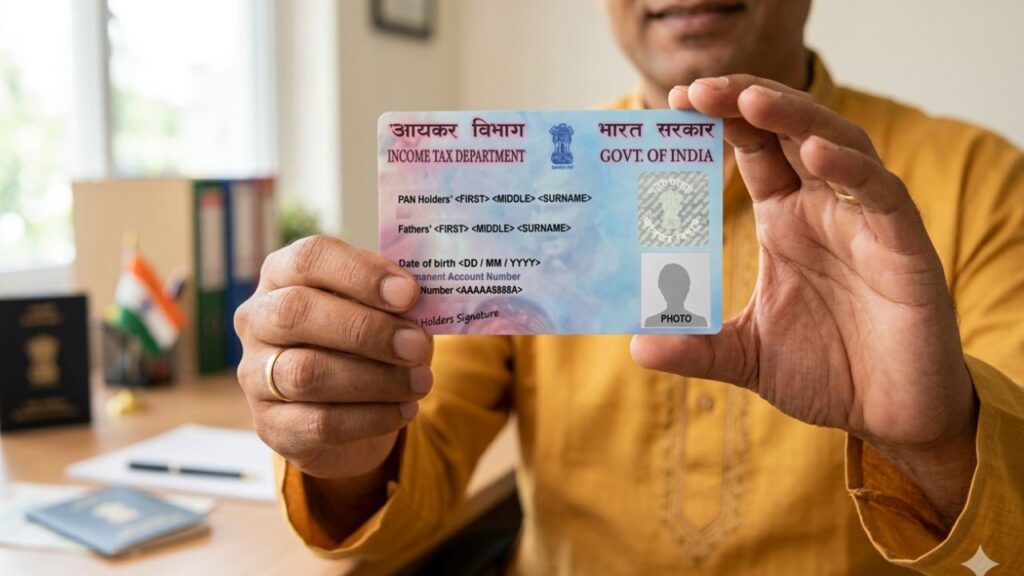
Many people face issues during KYC verification, bank account opening, loan processing, or income tax filing because their PAN card photo or signature does not match their current appearance or records. A blurred photo, old signature style, or mismatch with Aadhaar can easily lead to rejection or delays. To avoid these problems, the Income Tax Department allows individuals to update their PAN card photo and signature through an official correction process—both online and offline. This guide explains the entire process step by step, including documents required, fees, tracking, and common mistakes to avoid. ⭐ What Is PAN Card Photo & Signature Change? PAN card photo or signature change is a correction request made to update your existing PAN record without changing your PAN number. Only your photograph and/or signature are updated in the database to ensure smooth identity verification. This update is commonly required when: ⭐ Who Can Apply for PAN Photo or Signature Update? You can apply if: The PAN number remains the same after the update. ⭐ How to Change Photo in PAN Card Online (Step-by-Step) PAN photo change online is the fastest and most preferred method. Step 1: Visit the Official PAN Correction Portal Go to the PAN services website managed by Protean eGov Technologies Limited (formerly NSDL).Choose “Change/Correction in Existing PAN Data”. Step 2: Select Application Type Step 3: Enter Basic Details Fill in: Submit to generate a token number (keep this safe). Step 4: Choose Submission Mode Select one option: Step 5: Fill Personal & Correction Details Step 6: Select Document Proofs Choose documents for: Step 7: Upload Documents Upload clear scanned copies of: Step 8: Upload Photo and Signature Step 9: Pay the Fee Pay using: Step 10: Print & Dispatch (if required) If physical submission is chosen, post documents to: You will receive a 15-digit acknowledgement number to track status. Know more about: How to Change Photo and Signature in PAN Card Online ⭐ How to Change Photo in PAN Card Offline If you are not comfortable online, use the offline method. Offline Steps: Documents are forwarded by the centre to the PAN service unit. ⭐ PAN Card Signature Change Online – Full Process The signature update process is identical to photo correction. Key points: You may update photo + signature together in one application. ⭐ PAN Card Signature Change Offline Offline signature change follows the same steps as offline photo update, with one difference: ⭐ Documents Required for PAN Photo & Signature Change You must submit the following: 📄 Proof of Identity 📄 Proof of Address 📄 Proof of Date of Birth 📄 PAN Proof 📸 Photo & Signature ⭐ PAN Photo & Signature Change Fees Category Fee PAN correction (Indian address) ₹110 PAN correction (foreign address) ₹1,020 Fees may include GST and processing charges. ⭐ Processing Time & Status Tracking ⭐ Common Mistakes to Avoid (Very Important) These mistakes are the main reason for rejection or delay. ⭐ Why Updating PAN Photo & Signature Is Important An updated PAN ensures: ⭐ Conclusion Updating your PAN card photo and signature is a simple but crucial step to avoid unnecessary verification issues. Whether you choose the online paperless method or the offline PAN centre route, ensure documents are clear and details are accurate. A correct PAN record saves time, prevents rejections, and keeps your financial life hassle-free. For more step-by-step guides on PAN, Aadhaar, banking, and government documents, visit Sarkari Bakery. ❓ Frequently Asked Questions

Scroll to Top