
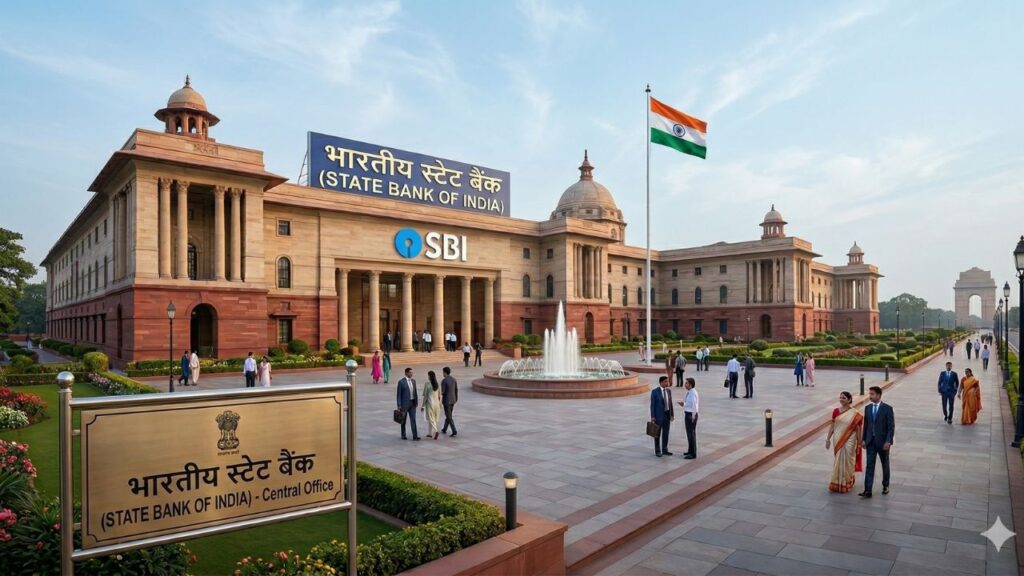
Government banks in India, also known as public sector banks, play a crucial role in the country’s financial system. These banks are not just for savings and loans—they are deeply connected with government schemes, financial inclusion, and economic development.
👉 If you are planning to open an account, take a loan, or apply for a government scheme, understanding government banks becomes very important.
📌 What Is a Government Bank?
A government bank is a bank where the Government of India owns more than 51% stake.
👉 This means:
- The bank is controlled by the government
- It follows strict RBI rules
- Your money is considered safer compared to many private options
As per official structure, these banks operate under the supervision of RBI and other regulatory authorities.
🏦 List of Government Banks in India (2026)
Currently, there are 12 public sector banks in India:
- State Bank of India
- Bank of Baroda
- Punjab National Bank
- Bank of India
- Union Bank of India
- Canara Bank
- Bank of Maharashtra
- Central Bank of India
- Indian Overseas Bank
- Indian Bank
- UCO Bank
- Punjab and Sind Bank
👉 Important Insight:
Earlier, there were more banks, but due to mergers, the number has reduced to 12.
📊 Top Government Banks in India (By Size & Strength)
Some banks are larger and more trusted due to their size and services.
Top Government Banks:
- State Bank of India (largest in India)
- Bank of Baroda
- Punjab National Bank
- Union Bank of India
- Canara Bank
👉 These banks have:
- Strong branch network
- Better digital services
- High customer base
🧠 Why Government Banks Are Important
Government banks are not just financial institutions—they are part of India’s development system.
✔ Key Roles:
- Provide loans to farmers, MSMEs, and businesses
- Support government schemes (Jan Dhan, Mudra, PMAY)
- Ensure banking access in rural areas
- Maintain trust in financial system
👉 They act as a bridge between the government and the public.
💡 Features of Government Banks
Government banks offer multiple benefits that make them reliable.
1. Wide Range of Services
- Savings account
- Fixed deposit
- Loans (home, personal, business)
- Credit cards
- Insurance
2. Safe and Trusted
- Government-backed
- Strong regulatory control
- Lower risk for depositors
3. Nationwide Presence
- Branches in rural and urban areas
- Easy access even in remote locations
4. Support for Government Schemes
- PM Jan Dhan Yojana
- Mudra Loan
- Subsidy schemes
5. Strong Regulation
They follow strict rules under RBI, ensuring transparency and safety.
⚖️ Government Bank vs Private Bank (Quick Comparison)
| Feature | Government Bank | Private Bank |
|---|---|---|
| Ownership | Government | Private companies |
| Safety | High | Moderate |
| Service speed | Slower | Faster |
| Trust level | Very high | High |
👉 Reality Check:
Government banks = safer
Private banks = faster service
🧠 Real-Life Scenario
Suppose:
- You want to open a zero-balance account
- Apply for government subsidy
👉 Government bank is better
But:
- If you want fast service and digital features
👉 Private bank may be better
🛑 Common Mistakes People Make
❌ Thinking all banks are the same
❌ Choosing bank without purpose
❌ Ignoring government scheme benefits
❌ Not checking branch availability
📊 Which Government Bank Should You Choose?
✔ Choose Based On:
| Need | Best Option |
|---|---|
| Safety | SBI / PNB |
| Rural banking | UCO / Central Bank |
| Digital services | SBI / Bank of Baroda |
| Loan services | Canara / Union Bank |
🔚 Final Conclusion
Government banks in India are the backbone of the country’s financial system. They offer:
✔ Safe banking
✔ Government scheme benefits
✔ Wide reach across India
👉 While they may be slightly slower in service, their reliability and trust make them a preferred choice for millions.
If you want more such practical guides on banking, tax, and government-related services, you can explore Sarkari Bakery, where content is focused on solving real-life problems.
FAQs
Based on Google's Helpful Content System, this article emphasizes user value, transparency, and accuracy. It incorporates principles of E-E-A-T (Experience, Expertise, Authoritativeness, Trustworthiness).
Why Choose Sarkari Bakery?
Official Information
Government schemes & banking information based on official sources.
Step-by-Step Guides
Simple application process explained for every service.
Regular Updates
Content updated whenever official rules or services change.
People-First Content
Helpful, transparent and user-focused content.