
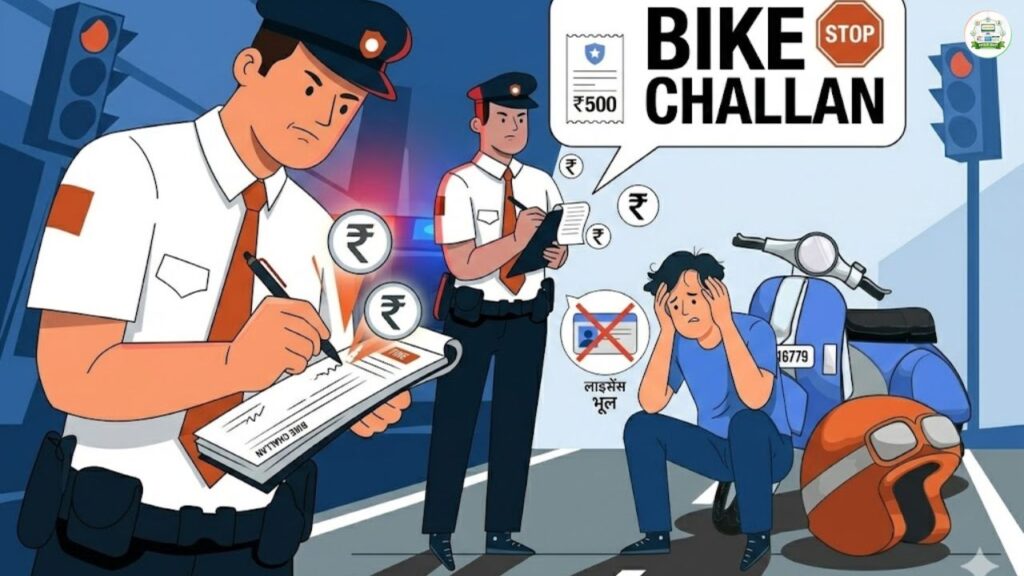
Over the past few years, traffic law reforms in India have significantly changed how challans are issued, tracked, and penalized. What used to be small, often ignored fines have now become stricter, digitally recorded penalties with long-term consequences.
If you are a bike rider or vehicle owner, understanding how traffic law reforms have changed challan penalties is extremely important.
🚦 Why Traffic Law Reforms Were Introduced
Before reforms:
- Fine amounts were very low
- Many riders ignored challans
- Manual enforcement created inconsistency
- Road accidents were rising
- Helmet and seatbelt compliance was weak
The government introduced amendments to the Motor Vehicles Act to:
✔ Improve road safety
✔ Reduce accident-related deaths
✔ Increase compliance
✔ Strengthen enforcement
✔ Make penalties more effective
The goal shifted from symbolic fines to serious deterrence.
📈 Major Changes in Challan Penalties
One of the biggest impacts of traffic law reforms was the increase in fine amounts.
Earlier:
- Minor violations attracted very small fines.
- Repeat offenders faced little escalation.
After reforms:
- Fine amounts increased significantly.
- Repeat offences attract higher penalties.
- Certain violations can lead to license suspension.
The idea is simple:
Higher penalties discourage reckless behavior.
🪖 Helmet Violations Became Stricter
Earlier, helmet fines were relatively low.
Now:
- Not wearing helmet results in heavy fine.
- Pillion rider must also wear helmet.
- Improperly fastened helmet may still attract penalty.
This reform has led to improved compliance in many cities.
🏎️ Over-Speeding Penalties Increased
Speeding was one of the major contributors to accidents.
Under reforms:
- Fines for over-speeding increased.
- Higher speeds attract higher penalties.
- Repeat offences may lead to license suspension.
Speed enforcement now acts as a strong deterrent.
📱 Mobile Phone Usage While Driving
Earlier enforcement was weak.
Now:
- Using mobile while riding attracts heavy penalty.
- Considered dangerous driving.
- Can escalate to court in serious cases.
Digital enforcement has made detection easier.
🧾 Driving Without Valid Documents
Reforms strengthened penalties for:
- Driving without license
- Expired insurance
- No PUC certificate
- Fake registration plates
Penalties for these violations became significantly higher compared to earlier laws.
💻 Digital Transformation of Challan System
One of the biggest reforms was digitization.
Earlier:
- Paper challans
- Manual entries
- Limited tracking
Now:
- E-challans generated automatically
- AI-based traffic cameras
- ANPR number plate detection
- Centralized Parivahan database integration
Digital systems reduced manipulation and improved transparency.
🔗 Linking Challans to License and RC
Reforms enabled:
✔ Challans linked to driving license
✔ Records stored permanently
✔ Repeat violations tracked
✔ Points system (in some states)
This means violations now affect long-term driving record.
⚖️ Stronger Legal Consequences
Traffic reforms introduced:
- Court escalation for serious offences
- Increased penalties for repeat violations
- Stricter punishment for dangerous driving
- Better enforcement against drunk driving
Challans are no longer “minor inconveniences” — they are legal records.
🚨 Impact on Bike Riders Specifically
Two-wheelers are closely monitored because:
- High accident rates
- Helmet non-compliance common
- Over-speeding on city roads
After reforms:
✔ Helmet compliance increased
✔ Signal jumping penalties increased
✔ Triple riding fines strengthened
✔ Number plate compliance strictly monitored
Bike riders now face more systematic enforcement.
📊 Example of Reform Impact
Before reforms:
- Rider ignores helmet fine
- Pays small amount occasionally
- No long-term impact
After reforms:
- Fine amount higher
- Violation recorded digitally
- Repeat offences tracked
- License consequences possible
The system now emphasizes accountability.
🏛️ Role of State Governments
Although central law was amended, state governments:
- Implement enforcement
- Install camera systems
- Conduct special drives
- Organize Lok Adalats for settlement
Enforcement intensity varies by state, but overall penalties remain stronger nationwide.
📌 Benefits of Traffic Law Reforms
Despite stricter penalties, reforms brought positive changes:
✔ Improved road safety awareness
✔ Increased helmet usage
✔ Reduced repeat violations
✔ Transparent enforcement
✔ Reduced corruption through digitalization
The system now focuses more on safety than revenue.
⚠️ Challenges After Reforms
However, some concerns also emerged:
- Higher financial burden on violators
- Occasional camera errors
- Public confusion about updated rules
That’s why awareness is important.
🛡️ What Riders Should Do Today
To stay compliant:
✔ Always wear ISI-certified helmet
✔ Follow speed limits
✔ Avoid mobile usage while riding
✔ Maintain valid documents
✔ Use proper number plates
✔ Check challan status regularly
Prevention is always cheaper than penalties.
🔚 Conclusion
Traffic law reforms in India have transformed challan penalties from small fines into serious, digitally tracked legal consequences. With increased penalties, AI-based enforcement, and centralized data systems, traffic violations are now harder to ignore and easier to track.
The reforms aim to:
✔ Improve road safety
✔ Reduce fatalities
✔ Increase discipline
✔ Strengthen accountability
For bike riders, this means riding responsibly is not just about avoiding fines — it’s about protecting your license, your vehicle, and your safety.
For more easy and detailed guides on traffic rules, legal processes, and government systems, visit Sarkari Bakery.
❓ Frequently Asked Questions
Based on Google's Helpful Content System, this article emphasizes user value, transparency, and accuracy. It incorporates principles of E-E-A-T (Experience, Expertise, Authoritativeness, Trustworthiness).
Why Choose Sarkari Bakery?
Official Information
Government schemes & banking information based on official sources.
Step-by-Step Guides
Simple application process explained for every service.
Regular Updates
Content updated whenever official rules or services change.
People-First Content
Helpful, transparent and user-focused content.