
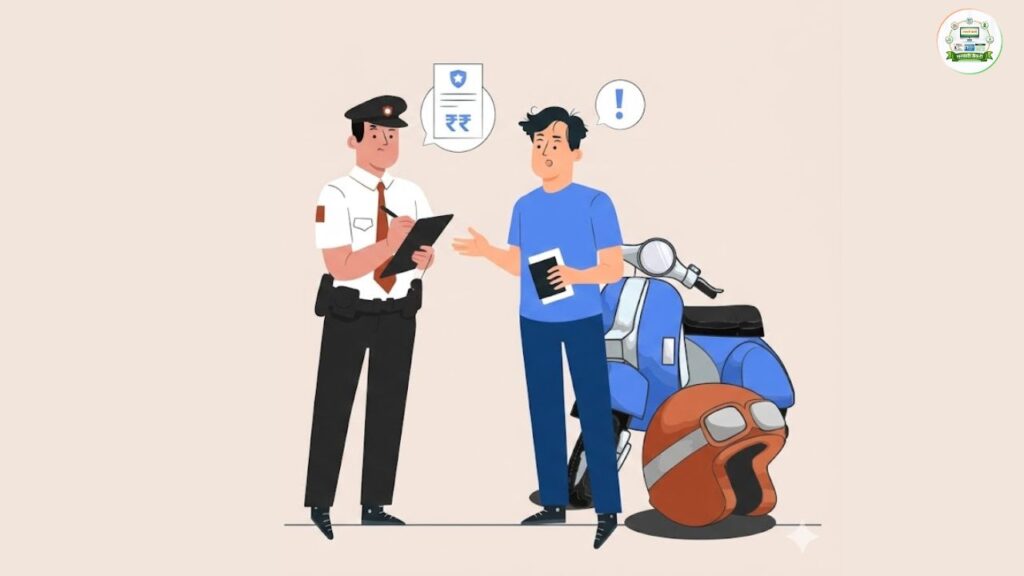
In recent years, traffic challans — especially for bike riders — have risen sharply across Indian cities and towns. Many riders see this increase as “just a fine,” but the trend reflects deeper changes in enforcement technology, road safety priorities, and legal accountability.
Understanding why bike challans are increasing, and what this means for everyday riders, can help you avoid fines, protect your license, and stay safe on the road.
📈 1. Stricter Traffic Enforcement by Authorities
Traffic police departments are actively enforcing road rules more strictly than before. Many states have adopted:
- Increased check points
- Frequent traffic patrols
- On-spot challan issuance
- Penal action for even minor violations
This means bikers face more chances of being caught for routine offences like not wearing a helmet or riding without documents.
🚩 Impact for riders:
Minor lapses that were often “ignored” earlier are now being penalized. Discipline on the road has become mandatory.
📸 2. Expansion of Automated e-Challan Systems
A major reason for rising challans is the expansion of India’s e-challen system — a digital platform that issues challans automatically using cameras and tracking software.
Technologies used include:
- CCTV surveillance
- ANPR (Automatic Number Plate Recognition)
- Red light cameras
- Speed detection devices
These systems automatically generate challans for violations such as:
- Jumping red lights
- Speeding
- Wrong lane driving
- Not wearing a helmet
🚩 Impact for riders:
You no longer need to be stopped by police physically — cams track, record, and issue challans instantly.
🚨 3. New and Updated Motor Vehicles Act Penalties
The updated Motor Vehicles Act (2019) introduced significantly higher fines to improve compliance. Many states have adopted these higher penalties.
For example:
- No helmet: ₹1,000
- Signal jump: ₹1,000
- Overspeeding: ₹1,000–₹2,000
- License not carried: ₹5,000
These fines are higher than previous years, so riding violations now hurt pocket harder.
🚩 Impact for riders:
Even routine mistakes now translate into steep fines.
👥 4. Increased Public Awareness and Reporting
With social media and citizen apps, the public increasingly reports unsafe riding behavior.
- Videos posted online
- Citizen complaints to traffic police
- Increased monitoring by local authorities
This public participation puts more violators on the radar.
🚩 Impact for riders:
Your bad riding habits can be noticed, recorded, and fined faster than ever.
🏍️ 5. Higher Vehicle Density and Road Usage
As more people buy bikes to avoid public transport delays, the number of vehicles on the road has surged.
- Narrow city roads
- More traffic intersections
- Increased chances of violation
More vehicles means more rule violations — and therefore more challans.
🚩 Impact for riders:
Crowded roads demand stricter rule following and patience while riding.
🪪 6. Integration of Digital Documents
Today, traffic police can verify your:
- Driving License
- RC (Registration Certificate)
- Insurance status
- Pollution (PUC certificate)
Digitally through apps and databases.
If any document is invalid or missing, you may be fined on the spot.
🚩 Impact for riders:
Not carrying or renewing documents can instantly trigger a challan.
📊 7. Road Safety Focus & Penalty Incentives
Authorities are treating traffic rules as a safety priority, not just a legal technicality. The increase in challans reflects:
- Focus on fewer road deaths
- Enforcement to curb risky behavior
- Encouragement for protective gear
Challans are intended to be preventive, not just punitive.
🚩 Impact for riders:
Following rules becomes not just legal compliance — it protects life.
🪙 What This Increase Means for Bike Riders
🔹 Higher Costs
More challans mean more money spent on fines if you ride carelessly.
🔹 Possible License Suspension
Repeated violations can lead to:
- Accumulating penalty points
- Suspension of driving license
- Court summons in extreme cases
🔹 Insurance Complications
Unpaid challans may affect insurance renewal or claims.
🔹 Longer Legal Risk
Unpaid fines can escalate to court cases or vehicle hold orders.
🛣️ How Riders Can Adapt
Instead of treating challans as unavoidable, riders can:
✔ Always wear ISI-certified helmets
✔ Carry original documents
✔ Obey traffic signals
✔ Follow speed limits
✔ Avoid risky lane changes or signal jumps
✔ Stay updated on local rules and fines
Good riding habits reduce both challans and accident risk.
🧠 Common Mistakes That Trigger Bike Challans
❌ Riding without helmet
❌ Fast acceleration near cameras
❌ Ignoring red lights
❌ Not carrying DL/RC/Insurance
❌ Riding in wrong lane
❌ Ignoring road markings
❌ Loud or illegal exhaust modifications
📍 Conclusion
The increase in bike challans across India isn’t random — it reflects a combination of technology adoption, law enforcement reform, road safety focus, and public participation. While this may feel strict to riders, it is ultimately intended to reduce accidents and make roads safer.
For responsible riders, this rise in challans should be a signal to adopt safer habits, carry valid documents, and follow traffic rules diligently.
To stay updated on traffic rules, challan procedures, and legal rights, visit Sarkari Bakery.
Frequently Asked Questions
Based on Google's Helpful Content System, this article emphasizes user value, transparency, and accuracy. It incorporates principles of E-E-A-T (Experience, Expertise, Authoritativeness, Trustworthiness).
Why Choose Sarkari Bakery?
Official Information
Government schemes & banking information based on official sources.
Step-by-Step Guides
Simple application process explained for every service.
Regular Updates
Content updated whenever official rules or services change.
People-First Content
Helpful, transparent and user-focused content.