
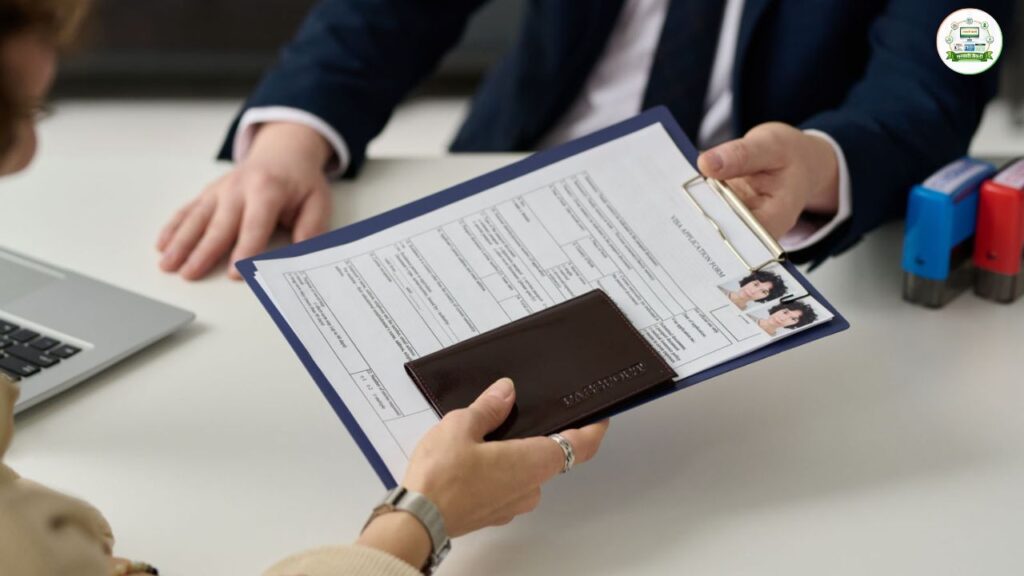
Most people think getting a passport is just about filling a form and visiting a Passport Seva Kendra. But in reality, the passport verification system — especially police verification — is the most important stage in the entire process.
Many delays, rejections, and confusion happen because applicants do not fully understand how verification works.
This guide explains how the passport verification system actually works in India, what authorities check, what can go wrong, and how to avoid problems.
⭐ Who Handles Passport Verification in India?
Passport verification involves two main authorities:
1️⃣ Passport Office (Regional Passport Office – RPO)
2️⃣ Local Police Department
The passport office processes your application, but the police verify your identity, address, and background before final approval.
⭐ Types of Passport Verification
There are mainly three types of verification:
1️⃣ Pre-Police Verification
Passport is issued only after police clearance.
Common for:
- First-time applicants
- Applicants with incomplete documentation
- Sensitive cases
2️⃣ Post-Police Verification
Passport is issued first, and police verification happens afterward.
Common in:
- Tatkal cases
- Certain reissue applications
If police report is adverse later, passport can be cancelled.
3️⃣ No Police Verification (Rare Cases)
May apply when:
- Government employees with proper verification
- Certain reissue cases with unchanged details
This is not common for fresh applicants.
⭐ Step-by-Step: How Passport Verification Actually Happens
Let’s break it down clearly.
🔹 Step 1: Application Submission
You submit your passport application online and visit the PSK (Passport Seva Kendra).
Your biometrics and documents are verified.
🔹 Step 2: File Sent to Police
After PSK approval, your file is digitally sent to your local police station based on your address.
The police station receives:
- Your application details
- Photograph
- Address
- Personal information
🔹 Step 3: Police Officer Assignment
A local verification officer (usually from the area police station) is assigned your case.
They will:
✔ Visit your address
✔ Or call you to visit police station
✔ Sometimes both
🔹 Step 4: Physical Address Verification
The officer checks:
- Whether you actually live at the address
- How long you have lived there
- Neighbour confirmation
- Basic background information
You may be asked to provide:
- Aadhaar
- Utility bill
- Rental agreement
- Voter ID
If you are not present during visit, verification may be marked incomplete.
🔹 Step 5: Background Check
Police check:
- Criminal record (if any)
- Pending court cases
- Previous passport history
- Whether information provided is truthful
Minor traffic challans usually don’t affect passport approval.
Serious criminal cases may require court permission.
🔹 Step 6: Police Report Submission
After verification, police submit one of the following reports:
✔ Clear / Positive Report
❌ Adverse Report
⚠️ Incomplete Report
The report goes digitally back to the Passport Office.
🔹 Step 7: Final Passport Decision
Passport Office reviews the police report.
If clear → Passport printed and dispatched.
If adverse → Application may be rejected or put on hold.
You will receive SMS/email updates.
⭐ What Causes Adverse Police Reports?
Many people assume criminal cases are the only issue — but that’s not true.
Common reasons:
❌ Applicant not found at address
❌ Address mismatch in documents
❌ Neighbours deny knowledge
❌ Fake rental agreement
❌ Signature mismatch
❌ Suppressing criminal case
❌ Multiple addresses without clarity
Small inconsistencies can delay approval.
⭐ How Long Does Passport Verification Take?
Average timelines:
Metro cities: 3–10 days
Smaller cities: 7–15 days
Delays may occur due to:
- Police workload
- Election duty
- Incomplete documentation
- Remote area residence
Tatkal may still require post-verification.
⭐ Does Tatkal Skip Police Verification?
No.
Tatkal speeds up issuance but:
✔ Police verification is still mandatory
✔ Passport can be cancelled later if verification fails
Never assume Tatkal bypasses checks.
⭐ What If Police Verification Fails?
If adverse report is submitted:
- Passport office sends notice
- You may be asked for clarification
- Re-verification may be possible
- In serious cases, application is rejected
You can reapply after correcting issues.
⭐ Special Situations in Verification
🔹 Living on Rent
Keep proper rental agreement + landlord confirmation.
🔹 Living in PG/Hostel
Provide bonafide letter and stay proof.
🔹 Frequent Address Change
Mention previous addresses clearly.
🔹 Criminal Case Pending
Court permission may be required.
🔹 Government Employee
Department verification may simplify process.
⭐ How to Make Passport Verification Smooth
✔ Use correct address with proper proof
✔ Be present at home during verification
✔ Keep neighbours informed
✔ Answer questions honestly
✔ Keep documents ready
✔ Respond quickly to police calls
✔ Track status online regularly
Transparency avoids trouble.
⭐ Can Passport Be Cancelled After Issuance?
Yes.
If post-police verification reveals:
- False information
- Criminal concealment
- Fraud documents
Passport may be cancelled under the Passport Act.
⭐ Is Neighbour Confirmation Mandatory?
In many areas, yes.
Police may ask neighbours:
- How long you live there
- Your general conduct
It is part of identity confirmation, not harassment.
⭐ Does Minor Passport Require Police Verification?
Depends on case.
If parents hold valid passports with no adverse records, verification may be simpler.
🔚 Conclusion
The passport verification system in India is designed to ensure identity authenticity and national security. Most delays are caused not by the system, but by inaccurate information or incomplete documents.
If you provide truthful details, correct address proof, and cooperate with police verification, the process is usually smooth.
Understanding how verification actually works removes fear and helps you prepare properly.
For more simplified guides on government processes, visit Sarkari Bakery.
❓ FAQs
Based on Google's Helpful Content System, this article emphasizes user value, transparency, and accuracy. It incorporates principles of E-E-A-T (Experience, Expertise, Authoritativeness, Trustworthiness).
Why Choose Sarkari Bakery?
Official Information
Government schemes & banking information based on official sources.
Step-by-Step Guides
Simple application process explained for every service.
Regular Updates
Content updated whenever official rules or services change.
People-First Content
Helpful, transparent and user-focused content.