
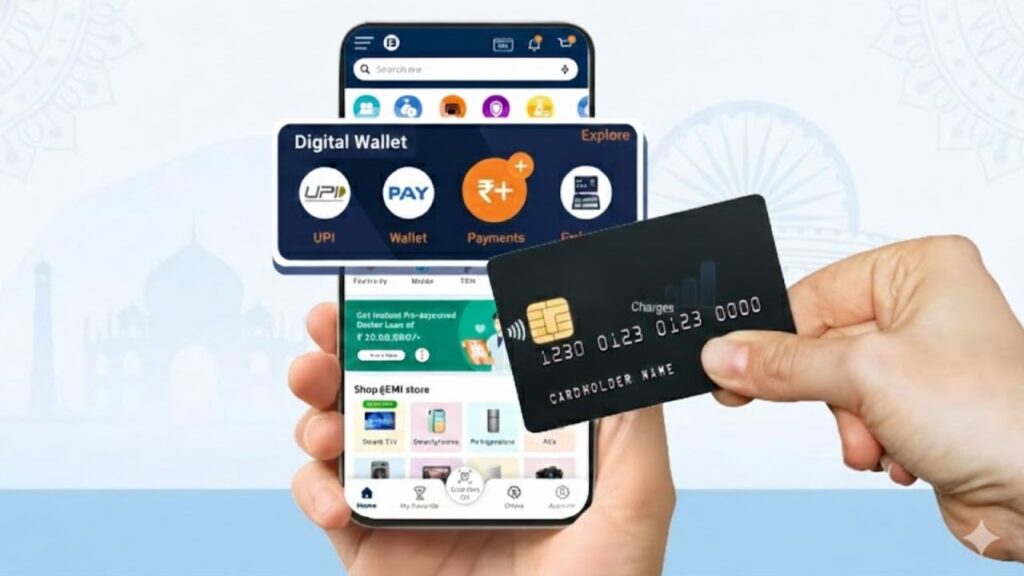
Many people apply for a Bajaj EMI Card thinking it offers completely “zero-cost” shopping. While it can be extremely useful for buying electronics, appliances, furniture, or even travel services on easy monthly instalments, most users don’t fully understand the charges associated with it.
Before you swipe your card for a ₹40,000 mobile phone or a ₹70,000 refrigerator, it’s important to understand the real cost structure, hidden fees, and situations where extra charges may apply.
This guide explains Bajaj EMI Card charges in detail so you can avoid unnecessary penalties and make informed financial decisions.
⭐ What Is a Bajaj EMI Card?
A Bajaj EMI Card is a pre-approved digital credit facility offered by Bajaj Finserv that allows customers to convert purchases into easy monthly instalments (EMIs).
Instead of paying the full amount upfront, you can:
- Convert purchases into EMIs
- Choose repayment tenure (3–24 months typically)
- Avail “No Cost EMI” offers at partner stores
- Shop online and offline
However, while the EMI looks simple, the charges depend on how and where you use it.
⭐ Types of Charges on Bajaj EMI Card
Not all transactions carry the same cost. Charges vary depending on usage type, repayment behaviour, and offer structure.
1️⃣ Processing Fee
Most EMI transactions attract a processing fee, even if the EMI is advertised as “No Cost”.
- Typically ranges from ₹99 to ₹799 (depending on offer and product)
- Charged upfront
- Non-refundable in most cases
Even when interest is waived, the processing fee still applies.
2️⃣ Interest Charges
There are two major types of EMI plans:
✔ No Cost EMI
- No interest charged to customer
- Interest is absorbed by merchant or Bajaj Finserv
- Processing fee may still apply
✔ Standard EMI
- Interest is charged
- Rate depends on product and tenure
- Longer tenure = higher total interest
Always check the effective interest rate, not just the EMI amount shown on the screen.
3️⃣ Annual Maintenance Charges (AMC)
The Bajaj EMI Card may include:
- Annual membership fee
- Renewal charges (depending on variant)
- Promotional lifetime-free offers (limited period)
Failure to clear AMC can temporarily restrict usage.
4️⃣ Late Payment Charges
If you miss your EMI due date:
- Late fee is charged
- Interest on overdue amount applies
- Credit score may be negatively impacted
Late charges usually increase depending on outstanding amount. Even a small delay can affect your credit profile.
5️⃣ Bounce Charges
If auto-debit fails due to insufficient balance:
- ECS/NACH bounce fee is charged
- Bank may also apply penalty
- Additional late interest may apply
Maintain sufficient funds at least 24 hours before EMI date.
6️⃣ Foreclosure Charges
Planning to close the loan early?
- Foreclosure charges may apply
- Usually 2–4% of outstanding principal
- Some No Cost EMI plans may have restrictions
Always check foreclosure terms before taking long tenure.
7️⃣ Cancellation Charges
If you cancel a product after EMI conversion:
- Processing fee may not be refunded
- Interest (if applicable) may be adjusted partially
- Refund timing depends on merchant policy
Never assume full refund without checking terms.
8️⃣ Card Replacement Charges
If your EMI card is lost or damaged:
- Replacement fee may apply
- You can block the card via app
- Digital version remains accessible
⭐ Hidden Charges People Often Miss
Here are some practical points many users overlook:
⚠ Processing Fee + GST
GST is charged on processing fee separately.
⚠ Convenience Charges
Some platforms may add payment gateway charges.
⚠ Insurance Add-ons
Optional insurance may get added during checkout.
⚠ Pre-EMI Interest
In rare cases, partial interest may apply before EMI cycle begins.
Always read the loan summary carefully before clicking “Confirm”.
⭐ Example: Real Cost Breakdown
Suppose you buy a washing machine worth ₹50,000 on 10-month No Cost EMI.
Possible scenario:
- EMI: ₹5,000 × 10 months
- Processing Fee: ₹499
- GST on fee: ₹90 approx.
- Total extra paid: Around ₹589
Even though EMI is “interest-free,” you still paid extra.
⭐ Who Should Use It Carefully?
Bajaj EMI Card is suitable for:
- Salaried individuals
- People with stable income
- Planned big purchases
Be cautious if you:
- Frequently miss payments
- Don’t track due dates
- Assume No Cost means zero charges
EMI works best for disciplined users.
⭐ Impact on Credit Score
Every EMI transaction is reported to credit bureaus.
✔ Timely payments improve score
❌ Late payments reduce score
❌ Multiple bounces lower credibility
Treat it like a structured loan, not free credit.
⭐ How to Avoid Extra Charges
Follow these smart habits:
- Always check total repayment amount
- Keep balance ready before due date
- Avoid unnecessarily long tenures
- Compare EMI vs upfront discount
- Read foreclosure policy
- Track EMIs in official app
Financial awareness saves more than convenience.
🔚 Conclusion
Bajaj EMI Card is a helpful financial tool when used responsibly. However, understanding processing fees, GST, interest structure, late penalties, foreclosure charges, and annual maintenance fees is essential before making a purchase.
“No Cost EMI” does not always mean completely free. Always calculate the total cost before confirming.
If used with discipline and proper planning, EMI can help manage cash flow smartly without hurting your credit score.
For more detailed and practical finance guides, visit Sarkari Bakery.