
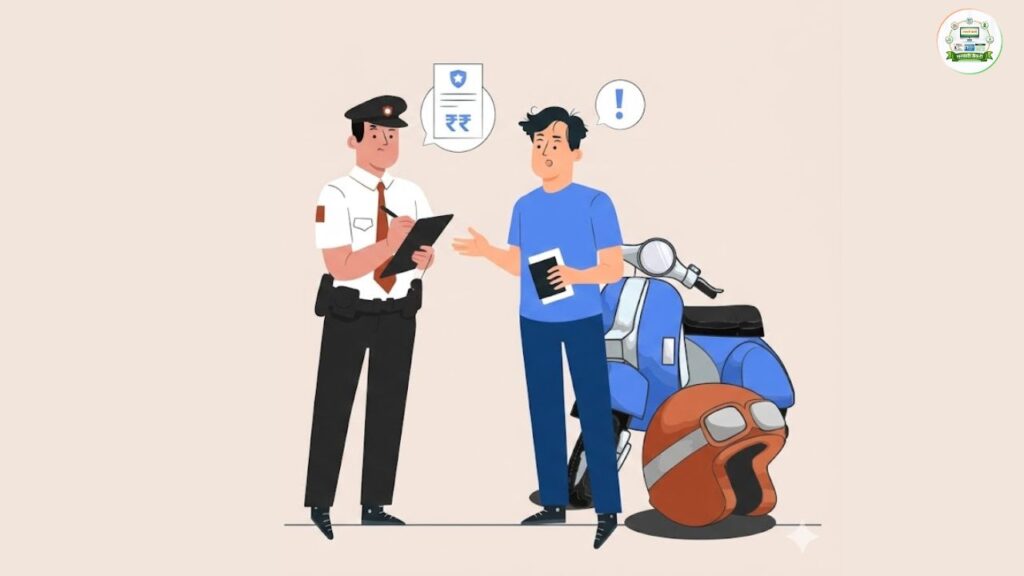
Helmet laws in India have become stricter in recent years — not just in terms of fines, but also in terms of enforcement. With AI-based cameras, digital e-challan systems, and stricter implementation of the Motor Vehicles Act, helmet violations are now one of the most commonly issued bike challans.
🚦 Why Helmet Rules Are Strict Now
Two-wheelers account for a large percentage of road accident fatalities in India. Studies show that:
- Head injuries are a major cause of death in bike accidents
- Wearing a proper helmet significantly reduces fatal injuries
- Many riders ignore pillion helmet rules
Because of this, helmet enforcement has become a top priority.
🪖 Who Must Wear a Helmet?
According to traffic regulations:
✔ Rider must wear a helmet
✔ Pillion rider must also wear a helmet
✔ Both must wear properly fastened helmets
This rule applies to:
- City roads
- Highways
- Residential areas
- Short-distance travel
There is no exemption for “just going nearby.”
🧾 What Type of Helmet Is Allowed?
Not all helmets are legally acceptable.
The helmet must:
✔ Be ISI-certified
✔ Have BIS (Bureau of Indian Standards) mark
✔ Fit properly
✔ Be securely fastened
Helmets without ISI mark can still lead to challan in some states.
🚨 Common Helmet Mistakes That Lead to Challans
1️⃣ Not Wearing Helmet at All
This is the most obvious violation and now heavily enforced.
2️⃣ Pillion Rider Without Helmet
Many riders assume only the rider needs a helmet.
This is incorrect.
Both rider and pillion must comply.
3️⃣ Wearing Helmet Without Strapping It
If the strap is loose or unfastened, it may still be considered a violation.
Some AI systems detect improper helmet usage.
4️⃣ Using Non-Standard or Decorative Helmets
Thin plastic caps, construction helmets, or novelty helmets are not valid.
5️⃣ Removing Helmet at Signal
Cameras at traffic signals capture violations even if helmet is removed briefly.
📸 How Helmet Violations Are Detected
Helmet challans are issued through:
🔹 AI-Based CCTV Cameras
- Detect rider’s head position
- Detect pillion rider
- Analyze helmet presence
🔹 Manual Enforcement
Traffic police using handheld devices.
🔹 ANPR Integration
Vehicle number captured → Owner details retrieved → E-challan generated.
Digital enforcement means violations are recorded even without police presence.
💰 Helmet Violation Fine Amount
Under updated traffic laws:
- Fine for riding without helmet can be significant.
- Repeat violations may lead to additional penalties.
- Some states may add license penalty points.
Fine amounts can vary slightly by state.
⚖️ Can Helmet Violation Affect Driving License?
In many regions:
✔ Helmet violation may add points to license
✔ Repeat violations may result in suspension
✔ Court notice may be issued in serious cases
Helmet compliance is not just about money — it can affect your driving record.
🛑 Are There Any Exceptions?
Some limited exemptions may apply in specific states for:
- Certain religious headgear
- Medical conditions (with valid proof)
However, such exemptions are rare and subject to strict guidelines.
🏍️ Practical Scenarios
Example 1:
You are wearing helmet, pillion is not.
AI camera captures both faces.
Challan issued automatically.
Example 2:
You wear helmet but do not strap it.
Police officer stops and issues manual challan.
Example 3:
You remove helmet at red signal due to heat.
Camera captures violation.
E-challan generated.
📲 How to Check Helmet Challan
You can check online using:
- Vehicle number
- Driving license number
Always verify evidence image before paying.
🛡️ How to Avoid Helmet Challans
✔ Always wear ISI-certified helmet
✔ Ensure pillion also wears helmet
✔ Properly fasten chin strap
✔ Avoid removing helmet at signals
✔ Keep number plate clean for accurate detection
✔ Regularly check for pending challans
Consistency prevents penalties.
🧠 Why Some Riders Still Get Challans Even When Wearing Helmet
Possible reasons:
- Helmet not visible clearly
- Pillion rider not detected as helmeted
- Camera angle issue
- Blurry footage
If wrongly issued, you can dispute with proper proof.
🚧 Impact of Helmet Rules on Road Safety
Stricter helmet enforcement has led to:
✔ Better compliance in metro cities
✔ Reduced head injury cases
✔ Increased public awareness
✔ Safer riding culture
The goal is safety, not just fine collection.
🔚 Conclusion
Helmet rules in India are clear and strictly enforced. Both rider and pillion must wear properly fastened ISI-certified helmets at all times.
With AI-based camera systems and digital e-challan platforms expanding rapidly, helmet violations are now one of the easiest offences to detect and penalize.
The safest and simplest solution:
Wear a proper helmet.
Strap it correctly.
Ensure pillion compliance.
Following these guidelines protects both your life and your wallet.
For more easy-to-understand traffic law guides and bike-related updates, visit Sarkari Bakery.