
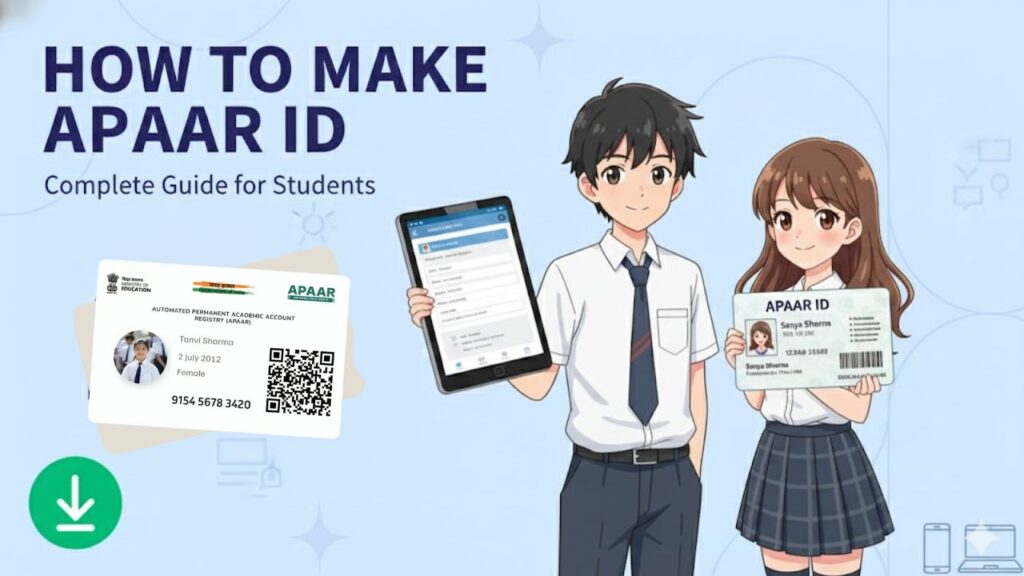
How to Make APAAR ID: Complete Step-by-Step Guide for Students & Parents
The education system in India is moving rapidly towards digital records and paperless verification. One of the most important initiatives in this direction is the APAAR ID (Automated Permanent Academic Account Registry ID). This unique academic identity allows students to store and manage their educational records securely throughout their academic life. If you are a student or a parent and want to understand how to make APAAR ID, why it is needed, and how it works, this detailed guide explains everything clearly in simple language. What Is APAAR ID? APAAR ID is a unique 12-digit academic identification number issued to students in India. It is designed to digitally record a student’s academic journey, starting from school to higher education. This ID is part of the National Education Policy (NEP 2020) initiative and is closely linked with the Academic Bank of Credits (ABC) system. Once created, the APAAR ID stays with the student for life and can be used to access academic records anytime. Why Is APAAR ID Important? APAAR ID helps bring all academic information to one secure platform. It removes the need to repeatedly submit physical certificates and marksheets during admissions or verifications. With APAAR ID, students can: Who Can Apply for APAAR ID? APAAR ID can be created for: For students below 18 years of age, parent or guardian consent is mandatory. Documents Required to Create APAAR ID Before the APAAR ID is generated, the following details are required: Ensuring that Aadhaar details match school records helps avoid delays. How to Make APAAR ID (Step-by-Step Process) APAAR ID creation is usually handled by the school or educational institution, not by the student individually. However, understanding the process helps students and parents track it easily. Step 1: School or Institution Registration The school or college registers students on the official APAAR or Academic Bank of Credits (ABC) platform. Step 2: Aadhaar-Based Verification The student’s Aadhaar details are entered and verified through OTP sent to the Aadhaar-linked mobile number. Step 3: Parent Consent (For Minors) If the student is under 18 years old, digital consent from a parent or guardian is collected using Aadhaar authentication. Step 4: Generation of APAAR ID Once verification and consent are complete, the system generates a unique APAAR ID for the student. Step 5: Confirmation and Access The APAAR ID is shared with the student through the school or institution. It is linked with the student’s academic profile for future use. How Students Can Check Their APAAR ID Students can check or access their APAAR ID through: Schools may also provide a printed or digital record of the APAAR ID. Is APAAR ID Mandatory? At present, APAAR ID is not compulsory, but it is highly recommended. The system is consent-based and designed to benefit students by simplifying academic processes. In the future, it may become essential for admissions, exams, and government education schemes. Common Problems and How to Avoid Them Some common issues during APAAR ID creation include mismatched Aadhaar details, inactive mobile numbers, or missing parent consent. To avoid problems: Final Thoughts APAAR ID is a major step toward a unified and digital academic ecosystem in India. It helps students manage their educational records securely and reduces paperwork at every stage of education. Understanding how APAAR ID works ensures that students and parents can coordinate smoothly with schools and avoid unnecessary confusion. For more simple and practical guides on education-related IDs, documents, and government processes, many readers prefer exploring clear explanations available on Sarkari Bakery.