
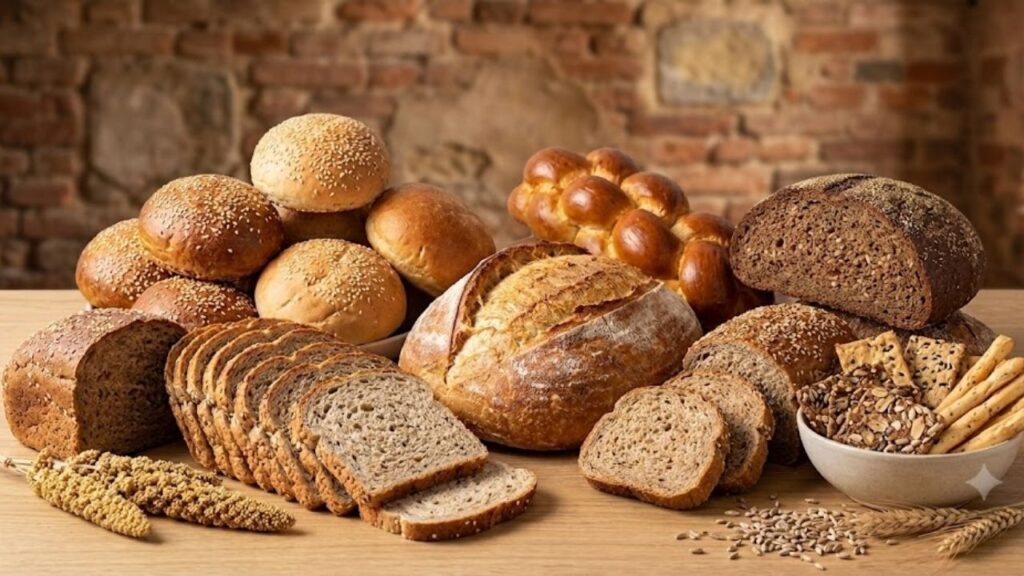
Bread is one of the most commonly consumed food products in India, but the GST treatment of bread can vary depending on the type of product, how it is sold, and its classification under GST. This makes GST on Bread an important topic for bakeries, manufacturers, retailers, restaurants, and small business owners.
Plain bread sold without packaging or branding may receive different GST treatment from packaged or value-added bakery products. Therefore, simply calling a product “bread” is not always enough to determine its taxability.
In this guide, we explain the GST treatment of different bread products, HSN classification, exemptions, billing requirements, Input Tax Credit (ITC), and important points businesses should understand before selling bread.
What Is GST on Bread?
GST on bread refers to the Goods and Services Tax applicable to bread and related bakery products sold in India.
The GST treatment depends on the classification of the product. Bread products may fall under the broader HSN 1905 category, but the applicable tax treatment can differ depending on the nature and classification of the product.
For a business selling bread, it is therefore important to identify:
- Whether the product is exempt or taxable
- Whether it is sold loose or pre-packaged
- Whether it is branded or unbranded
- Whether additional ingredients or flavours have been added
- Whether the product is sold as a packaged product or supplied as part of a restaurant service
- Which HSN classification applies
Is Bread Taxable Under GST?
Not every type of bread is treated in the same way under GST.
The source material distinguishes between plain, unbranded bread and various packaged or value-added bread products. Plain, unpackaged bread may be exempt, while certain packaged or speciality products may attract GST.
For businesses, this distinction is particularly important because an incorrect classification can affect billing, GST returns and Input Tax Credit claims.
GST Treatment of Different Bread Products
| Bread Product | Typical Form | GST Treatment Mentioned |
|---|---|---|
| Plain bread | Loose/unpackaged and unbranded | 0% |
| Branded packaged bread | Pre-packed | 5% |
| Flavoured/value-added bread | Packaged | 12% |
| Pizza base | Packaged | As applicable based on classification |
| Rusks/toasted bread | Packaged | 5% |
| Restaurant-served bread-based items | Prepared and served | Depends on applicable restaurant-service rate |
The exact rate should always be checked against the current GST classification and applicable government notifications before issuing an invoice.
GST Exemption on Plain Bread
Plain, unbranded and unpackaged bread is treated as an exempt product in the source material.
This can be particularly relevant for:
- Local bakeries
- Small bread manufacturers
- Shops selling loose bread
- Businesses selling basic bread without additional value-added features
For example, suppose a local bakery sells an ordinary unbranded bread loaf for ₹40.
If the product qualifies for the exempt treatment, the customer pays:
Bread price = ₹40
GST = ₹0
Final price = ₹40
The seller does not add GST to the customer’s bill for that exempt supply.
However, businesses should not assume that every product described as “bread” is automatically exempt. Product classification and the applicable GST notification should be checked carefully.
GST on Packaged and Branded Bread
Packaged and branded bread products can have a different GST treatment from loose, unbranded bread.
Examples may include:
- Packaged sandwich bread
- Branded bread loaves
- Pre-packed bakery products
- Speciality bread
- Value-added bread products
The source content identifies 5% GST for certain branded or packaged bread products.
This means that businesses selling such products need to ensure that their invoices correctly reflect the applicable tax rate.
GST on Flavoured and Value-Added Bread
Bread containing additional ingredients, flavours or other value-added components may receive different tax treatment.
Examples include:
- Garlic bread
- Fruit bread
- Multigrain bread
- Speciality bread
- Other flavoured bread products
The source material mentions 12% GST for certain flavoured, enriched or speciality packaged breads.
Because the classification can depend on the exact nature and presentation of the product, businesses should verify the applicable HSN and GST rate before billing.
GST on Garlic Bread
Garlic bread is a common example where the manner of sale matters.
If garlic bread is manufactured and sold as a packaged product, its GST classification may differ from garlic bread prepared and served by a restaurant.
For example, a packaged garlic bread product sold through a retail store may have a different GST treatment from garlic bread prepared and served as part of a restaurant service.
Therefore, businesses should not apply one GST rate to every garlic bread transaction without checking the applicable classification.
GST on Pizza Base
Pizza bases are also covered under the broader bakery-product classification.
A packaged pizza base purchased from a supermarket is different from a pizza prepared and served by a restaurant.
For a packaged pizza base, the applicable GST rate depends on its correct classification under the relevant GST tariff.
Businesses selling pizza bases should therefore mention the appropriate HSN code and GST rate on their invoices.
GST on Bread Sold in Restaurants
Bread-based products supplied by restaurants can be treated differently because the transaction may constitute a restaurant service rather than simply the sale of a packaged bakery product.
For example, consider two transactions:
Transaction 1: A customer purchases a sealed packaged garlic bread product from a retail store.
Transaction 2: A restaurant prepares garlic bread and serves it to the customer.
Although both products may be called garlic bread, the GST treatment can differ because the nature of the supply is different.
Restaurants should therefore follow the GST rate applicable to the relevant restaurant service rather than automatically applying the rate used for packaged bakery products.
HSN Code for Bread
Bread and several related bakery products are generally associated with HSN Chapter 1905.
The source material identifies HSN 1905 for bread-related products such as:
| Product | HSN Mentioned |
|---|---|
| Plain bread | 1905 |
| Packaged bread | 1905 |
| Fruit/flavoured bread | 1905 |
| Garlic bread | 1905 |
| Pizza base | 1905 |
However, businesses should verify the precise HSN classification applicable to their particular product before filing GST returns or issuing invoices.
The HSN code should correspond to the actual product being supplied.
Bread GST Rate: Why Classification Matters
One of the biggest challenges for businesses is assuming that all bakery products have the same GST rate.
Two products can have similar names but different tax treatment because of differences in:
- Ingredients
- Packaging
- Branding
- Preparation
- Nature of supply
- Product classification
For example, plain loose bread and a value-added packaged bread product cannot necessarily be treated identically.
Correct classification helps businesses avoid:
- Incorrect GST collection
- Incorrect GST returns
- Tax notices
- Interest or penalty exposure
- Problems with Input Tax Credit
GST Billing Rules for Bread Sellers
A business selling taxable bread products should issue a GST-compliant invoice.
Depending on the transaction, the invoice may include:
- Seller’s name
- GSTIN
- Invoice number
- Invoice date
- Customer details, where required
- Product description
- HSN code
- Quantity
- Taxable value
- Applicable GST rate
- CGST and SGST, or IGST as applicable
- Total invoice value
For exempt products, the invoice treatment should also follow the applicable GST invoicing requirements.
Businesses selling both exempt and taxable products should maintain proper records so that the supplies are correctly reported.
Example of GST Calculation on Bread
Suppose a business sells a taxable packaged bread product for a taxable value of ₹100 and the applicable GST rate is 5%.
The calculation would be:
Product value = ₹100
GST @ 5% = ₹5
Customer pays = ₹105
For an intra-state transaction, the GST may be divided into CGST and SGST according to the applicable rate.
For an inter-state transaction, IGST may apply.
The actual rate must be confirmed based on the classification of the product.
GST on Loose Bread vs Packaged Bread
This is one of the most important distinctions for small bakeries.
| Factor | Loose Plain Bread | Packaged/Branded Bread |
|---|---|---|
| Packaging | Usually unpackaged | Pre-packed |
| Branding | Generally unbranded | May be branded |
| GST treatment | May be exempt | May be taxable |
| Billing | Exempt-supply treatment where applicable | GST invoice where applicable |
| Classification | Must still be correctly identified | HSN classification required |
Businesses should not rely only on the packaging status. The actual GST notification and product classification should be checked.
Can Bread Sellers Claim Input Tax Credit?
Input Tax Credit, commonly called ITC, allows an eligible registered taxpayer to claim credit for GST paid on eligible business inputs and expenses, subject to GST law.
For a bakery producing taxable products, potentially relevant business inputs may include:
- Flour and other ingredients
- Packaging material
- Machinery
- Equipment
- Professional services
- Other eligible business expenses
However, ITC is not automatically available simply because GST was paid on an input.
The taxpayer must satisfy the applicable conditions under GST law.
When Is ITC Not Available?
Businesses dealing exclusively in exempt supplies generally cannot claim ITC attributable to those exempt supplies.
For example, if a bakery only sells qualifying exempt plain bread, it cannot simply claim all GST paid on its business purchases as ITC.
The treatment becomes more complicated when a business sells both taxable and exempt products.
In such cases, ITC attributable to taxable supplies and exempt supplies needs to be dealt with according to the applicable GST rules.
GST for Bakeries Selling Both Exempt and Taxable Bread
Many bakeries sell multiple types of products.
For example, a bakery may sell:
- Plain bread
- Brown bread
- Garlic bread
- Cakes
- Biscuits
- Pastries
- Pizza bases
- Other bakery products
Some products may be exempt while others may be taxable.
Therefore, the bakery needs proper accounting and classification for each product.
Maintaining accurate product-wise records can help with:
- GST invoicing
- Return filing
- ITC calculations
- Stock records
- Tax reconciliation
Does a Home Baker Need GST Registration?
GST registration requirements depend on the applicable GST registration rules, including turnover thresholds, nature of supplies and other conditions.
A home baker should not assume that registration is automatically required merely because they sell bread.
At the same time, businesses making taxable supplies need to check whether they cross the applicable registration threshold or fall under any other compulsory-registration provision.
The source material mentions ₹20 lakh as a general threshold example, but GST registration thresholds and special-category rules can vary. Therefore, the current applicable threshold should be verified before making a registration decision.
Impact of GST on the Bread Industry
GST has affected different segments of the bread and bakery industry in different ways.
Benefits for Small Bakeries
Where qualifying plain bread is exempt, small businesses can sell the product without adding GST to the customer’s price.
This may help:
- Keep prices affordable
- Reduce tax-related complexity for exempt supplies
- Support small bakery businesses
- Make basic food products more accessible
Standardised Tax Framework
GST replaced several indirect taxes with a unified tax framework.
For businesses operating across different states, a common GST framework can simplify:
- Billing
- Tax reporting
- Accounting
- Interstate transactions
Challenges for Businesses
Businesses selling multiple types of bakery products may face classification challenges.
A wrong classification can result in:
- Incorrect tax collection
- Incorrect returns
- ITC issues
- Tax notices
- Interest or penalties
This is why proper GST classification is important for bakeries.
GST on Bread: Important Points for Businesses
If you manufacture or sell bread, keep these points in mind:
- Do not assume that every bread product has the same GST rate.
- Identify whether the product is exempt or taxable.
- Check the correct HSN classification.
- Maintain proper purchase and sales records.
- Issue GST-compliant invoices for taxable supplies.
- Keep exempt and taxable supplies properly identified.
- Claim ITC only when permitted under GST rules.
- Reconcile GST records regularly.
- Check the latest CBIC notifications before changing your tax rate.
Common Mistakes While Charging GST on Bread
Some common mistakes include:
Applying GST to Every Type of Bread
A business may charge GST simply because it is registered under GST. However, registration does not mean every product sold by the business is automatically taxable.
Using the Wrong HSN Code
The HSN should correspond to the product actually being supplied.
Applying the Same Rate to Different Products
Plain bread, speciality bread and restaurant-prepared products may not necessarily receive identical treatment.
Incorrect ITC Claim
ITC related to exempt supplies cannot simply be claimed in full.
Ignoring Changes in GST Notifications
GST rates and classification rules can change. Businesses should therefore verify the latest official notification rather than relying on old articles.
GST on Bread – Quick Comparison
| Product | Typical GST Treatment |
|---|---|
| Plain loose/unbranded bread | 0% where exemption applies |
| Certain packaged/branded bread | 5% as stated in the source material |
| Certain speciality/flavoured bread | 12% as stated in the source material |
| Packaged pizza base | Depends on applicable classification |
| Restaurant-prepared bread item | Applicable restaurant-service rate |
| HSN broadly associated with bread | 1905 |
Important: GST rates can depend on the precise product classification and applicable government notification. Businesses should verify the current rate before invoicing.
Conclusion
Understanding GST on Bread is important for everyone involved in the bakery business, from a small local bakery to a large packaged-food manufacturer.
The key point is that GST treatment is not determined simply by calling a product “bread”. Product classification, packaging, branding, ingredients and the manner in which the product is supplied can affect its tax treatment.
Businesses should therefore use the correct HSN classification, maintain proper records, issue appropriate invoices and regularly check the latest GST notifications before applying a tax rate.
If a bakery sells both exempt and taxable products, it should also pay particular attention to its Input Tax Credit calculations and GST compliance.
Frequently Asked Questions
Based on Google's Helpful Content System, this article emphasizes user value, transparency, and accuracy. It incorporates principles of E-E-A-T (Experience, Expertise, Authoritativeness, Trustworthiness).
Why Choose Sarkari Bakery?
Official Information
Government schemes & banking information based on official sources.
Step-by-Step Guides
Simple application process explained for every service.
Regular Updates
Content updated whenever official rules or services change.
People-First Content
Helpful, transparent and user-focused content.